This is the second in a series of posts about the Virtual Medieval and Renaissance Music conference, which should have been held in Edinburgh. For me, this was one of the unexpected boons of the Covid-19 pandemic – I wouldn’t have been able to attend in person, but I was really glad of the opportunity to take part online.
Over lunch on day 1, I listened to Samantha Arten on ‘Singing The Whole Booke of Psalmes’and its links with ideas of order and disorder. She suggested that the book’s success lay mainly in its audience’s failure to use it as it was intended. Her practical demonstrations were really helpful and really demonstrated why you need to try out singing the music rather than just reading them. For example, she suggested that we sang along with her in a performance of Psalm 2. Obviously, as I was eating my lunch at the time, I didn’t, but throughout her singing I was wondering why she hadn’t cropped her photos of the psalm book so that we could see the tune on the right hand side of one page at the same time as the word on the left hand page of the next image (ie, on the reverse side of the page with the tune). But that was precisely her point – in order to sing the tune the first time, you have to flip back and forth in the book to read the music, or learn the tune. The problem wsa compounded by tune references which related to music printed at points further away in the book, since multiple psalms were set to the same tune but the music was only printed once. As she said, that’s hardly an insurmountable problem, given the number of times the tune would be repeated, while we might also remember that people were used to learning tunes by ear (indeed, we still are). She outlined other practical difficulties faced by people with different editions of the book, where tune directions changed or migrated, which would effectively mean that people had to jettison the ‘suggested’ tunes and simply find a single tune that fitted and which everyone knew.
She then moved on to look at reader annotation which shows how readers actually used their copies. Some corrected mistakes in the texts, while others added alternative musical directions or information. There was also evidence of uses completely unrelated to the content, such as baptism records. It was particularly notable that only one of the many copies she has studied contained a correction to the psalm tunes. She suggested that the readers saw the book much more as a devotional text than a music book, although this left me wondering about those who learned the tunes by ear. Granted, this probably means that most people weren’t using it as a way to learn to read musical notation, as she has already demonstrated that it was intended, but it still doesn’t preclude readers singing the song. But she also pointed out that it might well mean that Temperley was right when he suggested that most people did not use the printed ‘proper’ tunes, but instead a smaller group of ‘common tunes’. One of her most interesting conclusions was that the ability to substitute one tune for another requires a fairly sophisticated understanding of musical metre, even if people could explain it or express it.
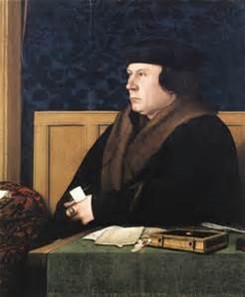
Given my interest in Thomas Cromwell, I made a point of listening to Magnus Williamson on ‘Taverner after Oxford’, which presented new evidence for Taverner’s whereabouts during his ‘lost years’. I had to make a note of Williamson’s comment that some of the documents in Lincolnshire archives have not yet been fully explored in relation to the Pilgrimage of Grace. And of course I’m interested in Mary I, so I had to listen to Anne Heminger’s examination of ‘Civic Processions and the Performance of English Catholicism under Mary I’. They were part of a struggle to define England’s identity, and Anne suggested that Mary’s processions asserted Catholicism as the officially sanctioned orthodoxy and helped to bind the viewers together in an explicitly English community identity. Public processions under Henry VIII, involving the whole of London as either viewers or participants, were held only a few times a year, while smaller processions by parishes or guilds were more common. Although the large scale, general processions were stunning, but the king himself was not a participant. They included hundreds of voices singing polyphony in procession, and this would have been audible over a wide area, presumably. Edward VI’s government forbade processions because they were seen as papal, but instead, music played a critical role in the widespread adoption of religious reform. Instead of processions, the public expression of religious belief came in the form of sermons at Paul’s cross. Mary reinstated public processionals using the Te Deum and the processional hymn, Salve festa dies—seven versions of which appeared in the Sarum processional – for significant political events, allowing people to worship in public. It also allowed them to link past performances to current events. Anne argued that this indicated a desire to strengthen the connection between the English Catholic past and her hope for the nation’s future.
Having listened to the papers on early modern England, I moved on to the panel on Music for the Dead in the Early Modern Period, and managed to squeeze one of them in before the keynote ‘watch party’. Ascensión Mazuela-Anguita talked about ‘Music to reach heaven: Sixteenth-century Barcelonan convents in urban life’, suggesting that the frequency of the adjective ‘celestial’ being applied to nuns voices suggests that their voices were particularly associated with the angels. There were, however, concerns about the way women’s voices attracted men, who might be able to identify individual nuns by their voices. Their voices were also seen to make a connexion between heaven and earth, making them particularly important in post-mortem masses, which helped speed the soul of the dead through purgatory and on to heaven. In some cases, nuns left provision for thousands of masses after their death. Similar patronage was linked to popular religiosity as many people from all levels also endowed masses for their souls, or those of their families.
Interestingly, this paper connected really well with Professor Laurie Stras’s keynote, ‘What Does it Mean When a Woman Sings?’ Laurie, who was recovering from Covid-19 at the time she recorded her paper, pointed out that she is a firm believer in practising and performing the music that she studies. She noted that she has been challenged over this when they move from women’s music to that from male spaces, and that this is in part because the focus has been on technique rather than meaning. She wanted to think what informed ‘meaning’ when the music was new, and compare it to what it means now. Her observations were based on Franco-Flemish and Italian polyphonic music from the late 15th to early 17th centuries, and obviously there were differences in different locations and confessions.
The problem that some people have with women singing polyphony comes from Christian traditions, even though women sing throughout the Bible, and two songs by women are central to the Catholic tradition. No-one objected to nuns singing unison chant, because unlike polyphony or extemporised chant, it didn’t require knowledge – and it was knowledge, not desire, which was the problem with nuns singing. As long as it was unison chant, nuns could sing the most erotic texts.
For noble women, the issues were slightly different. They were trained from an early age to be ready for display at court and on the marriage market. Castiglione’s ideal woman should only perform modestly and at someone else’s request, while it was unseemly for women to exert themselves in order to learn how to do this. Any display of this agency is immodest.
She made some interesting points about how these issues have still not been resolved. Einstein, for example, thought that louche women were the enemy of the composer’s intended meaning. The discussion of the inclusion of girls in cathedral choirs, the lack of volunteers to be castrati and the timbre and pitches of modern voices was absolutely fascinating. The Live Question and Answer session discussed some ideas around the need to restore women’s voices to the soundscape.
 Home
Home 
Leave a comment