Back at the end of March, I went to Dublin with Amy-Louise Smith and Katherine Butler to present a panel at the Renaissance Society of America Annual Meeting in Dublin. It was a really lovely few days, and good to be back at a face to face conference, and this is the second in a pair of posts about the trip.
The most popular panel that I went to during the conference was Street Politics: Informal Political Spaces in Renaissance Europe – it was standing room only! It was introduced by Fabrizio Nevola, who described the Hidden Cities research project which aims to demonstrate social spaces in 5 cities across Europe through apps and a website. It will also produce an open access book, Hidden Cities, published by Routledge. The project focuses on the material culture of urban public spaces and street life in Renaissance Europe. The itineraries are led by narratives and the app uses augmented reality and critical storytelling characters who are guides to the cities – that is, the apps are research-based but use fiction to fill in the gaps. Streets are political space where power is exercised but so is resistance through song, or fly posting, for example.
My colleague from EDPOP, Massimo Rospocher, then spoke on ‘Publicamente detto sopra la piazza’: Popular Politics in Renaissance Italy. He emphasised space as an analytical element and highlighted the political function of space in Venice. The Venetian aristocrat, Priuli, complained about informal political discussion in the squares and loggias. These spaces marked the movement of political decisions from the private to the public spaces. Loggias were used for official proclamations but also for the contestation of policy – it was routine, for example, for defamatory bills to be fixed to the columns of the ducal palace. It was also a place where placards and manifestos were posted. Witnesses attest to the various political functions of the loggia outside the palazzo. I was reminded of my special subject session on proclamations when Massimo talked about bills that were deliberately created to mimic official proclamations, which would also be posted in the same place – and therefore, witnesses tended to claim that they thought was official, otherwise they would not have read it. Likewise, they often claimed that they took them down in order to destroy them. Another space used for politics was the loggia del broletto – the magistrates palace – so it was not just the loggia outside the ducal palace that was used for political communication, but anywhere outside a building with civic authority. Thus, Massimo said, they were clearly exploiting the space’s association with authority and official announcements and doing it in order to claim authority.
Ann Tlusty then talked on Songs as Social Media: Street Songs and Political ociability in Early Modern Germany. She explained how artisan singers offered entertainment in streets, pubs and informal spaces, some of which offered political or social commentary. She gave the example of a 1584 uprising, during which Jonas Loach composed and sang songs. His collection of 25 songs (either associated with or written by him) fell into authorities’ hands after the uprising. She pointed out that sharing political songs politicised social spaces. Like me, she noted that oral transmission is the thing that makes political song so difficult to control for the authorities and the reason they see it as such a threat. It was really interesting to hear a paper on a different country that had so many overlaps with my own work!
The last paper in the panel was given by Juan Gomez on Conflict and Public Space during the Revolt of Brotherhoods, which broke out in Valencia during the summer 1519 when a political vacuum was created when authorities fled doing its plague leaving the militia raised to run the city. Violence focussed on places of authority: political and religious power centred the cathedral while popular power was situated around the market square. Panic and disorder led the guilds to apply to bear arms so they could take control of the streets and prevent Muslim pirating. This was approved by the crown. Soon the guilds were accused of oppessing the poor and weak. The new viceroy was even forced to change the route of his official entry into city so that it went through the popular areas of the city where the guilds were based. Indeed, Juan talked about the processions made by the viceroy and the rebels and the use of space to make statements of power, describing a dynamic relationship between place and people.
In some ways, the audience for the next panel I attended was like a move from the sublime to the ridiculous. I moved from a room that was packed to the gunnels to an audience that contained only 5 men, and all but one left after the first paper by Daniela Gutierrez Flores, which was on a man cooking!
In Sing a Song of Sex Work, Kris McAbee looked at the intersections of labour, embodiment and performance. She described how women’s bodies were exploited in marriage, gendered labour and sex work. Sexual labour had a social use but it transgressed social norms even when it took place in state sponsored brothels. She argued that sex workers were often more honest their about their desires – they are, after all, charactered by Robert Greene in his coney -catching pamphlets as being proud of their skills. Broadside ballad representations of these women are similar. About 8 broadside ballads are extant from the period after the bawdy-house riots. They signal the shifting attempts of the government to control brothels and the regulations to control the institutions in which prostitutes work. She pointed out that the word whore could be used loosely to denote not just prostitutes but others with loose morals. The ballads link to each other because of the embodied experience of performance. They recognise performance as a commodity.
Ezra Horbury continued the theme of sex work in Mothers Whoring Daughters: Teaching Sex Work in Early Modern Drama, looking at sex work as a way of achieving liberty for women and as a metaphor for social disorder. Sex word was taught in a pedagogical relationship which contrasted with the male pedagogical relationships, and might be undertaken for financial reasons so in some ways was similar to the marriage market. Of course, not all sex acts are reproductive and sex workers sometimes or maybe often engaged only in reproductive acts only with a husband, fiancé or partner while having non-reproductive acts with a variety of other clients.
The final paper in the panel was given by Rebecca Simon on Anne Bonny and Mary Read: The Commodification and Consequences of ‘Good’ and ‘Bad’ Female Pirates, in which she discussed the potrayal of the two women in A General History of the Pyrates. Anne, who ran away with a pirate for love was presented as feminine, while Mary, who was raised as a boy, was seen as even more transgressive because of her lack of femininity.
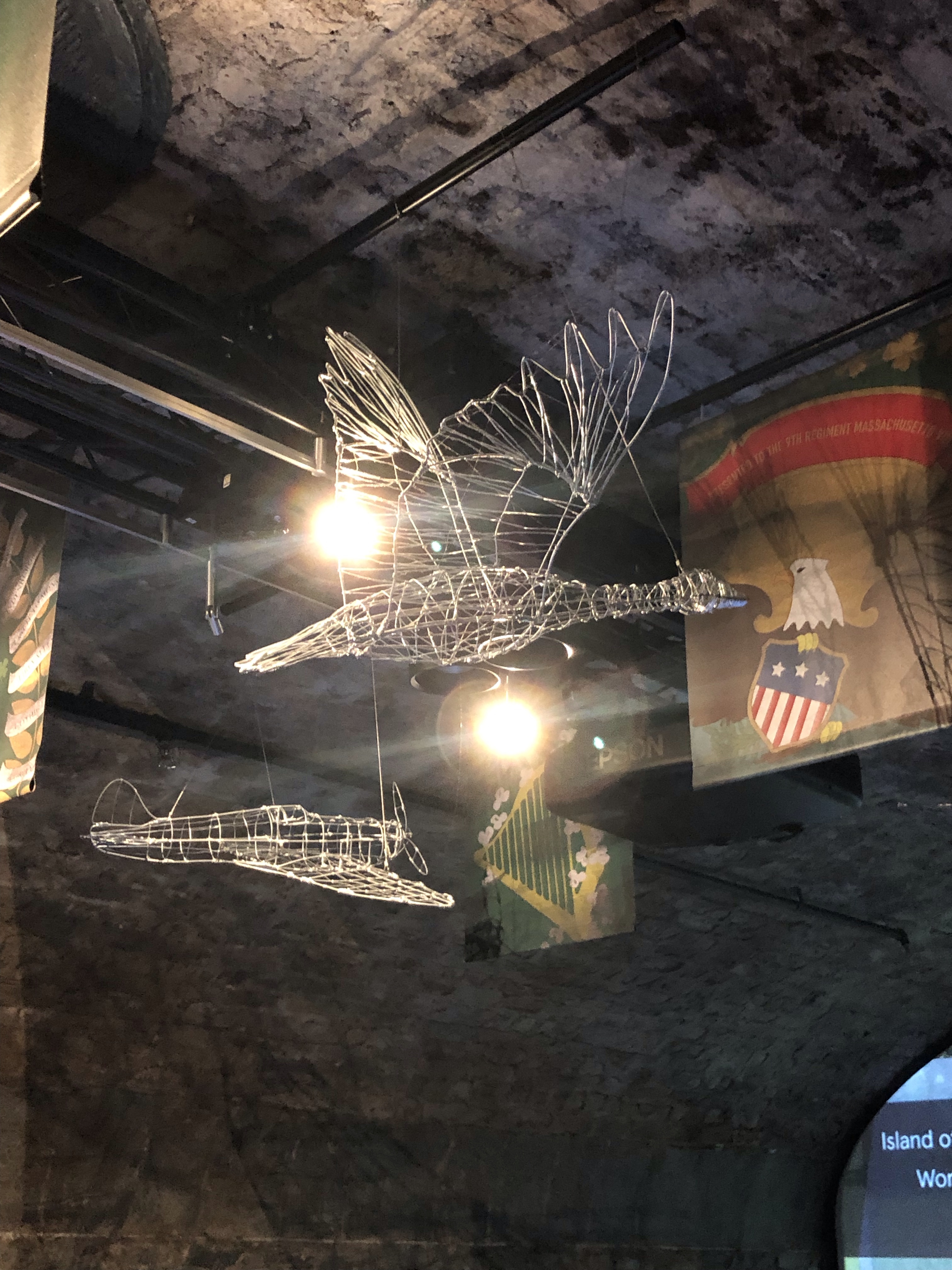
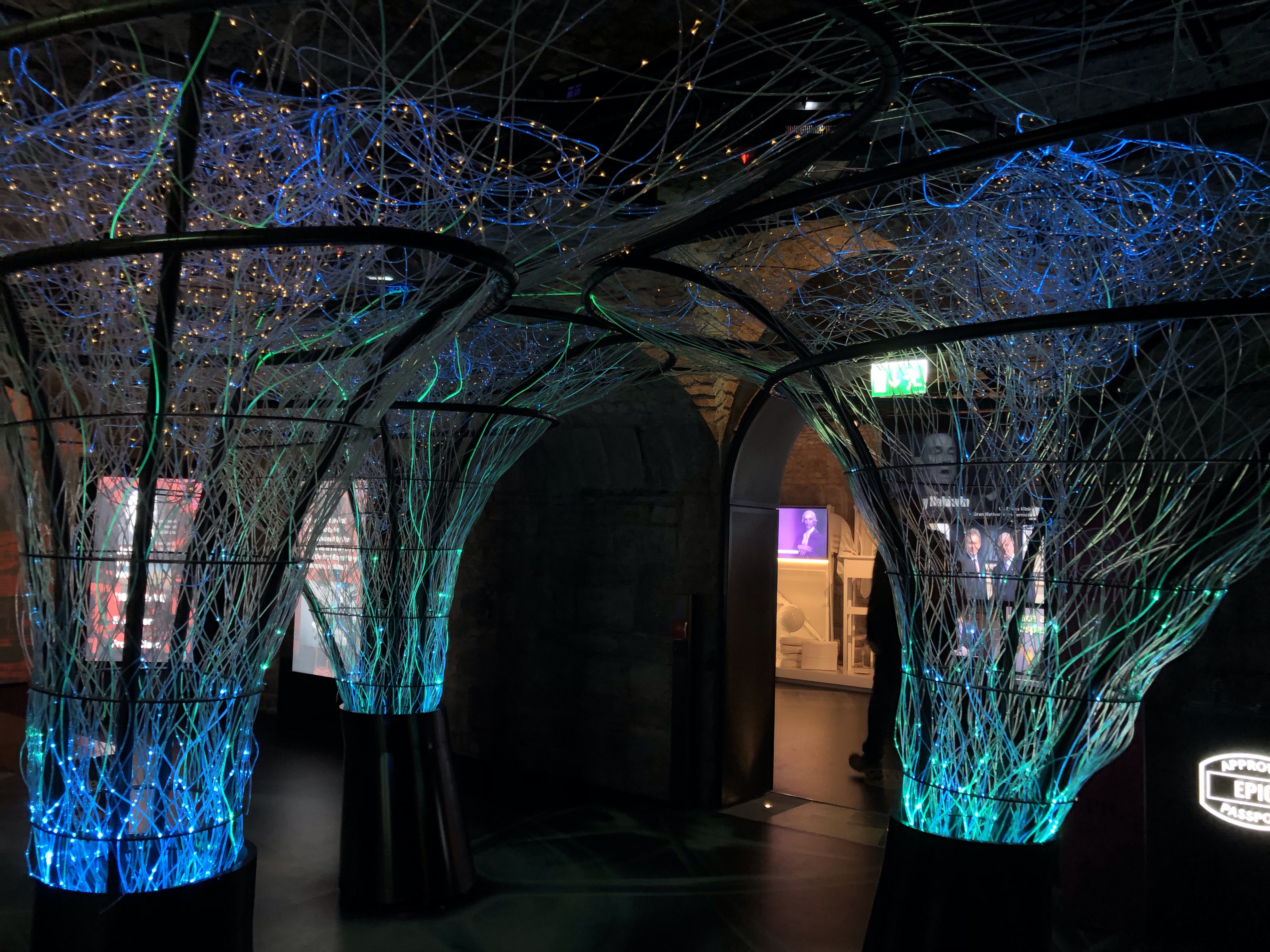
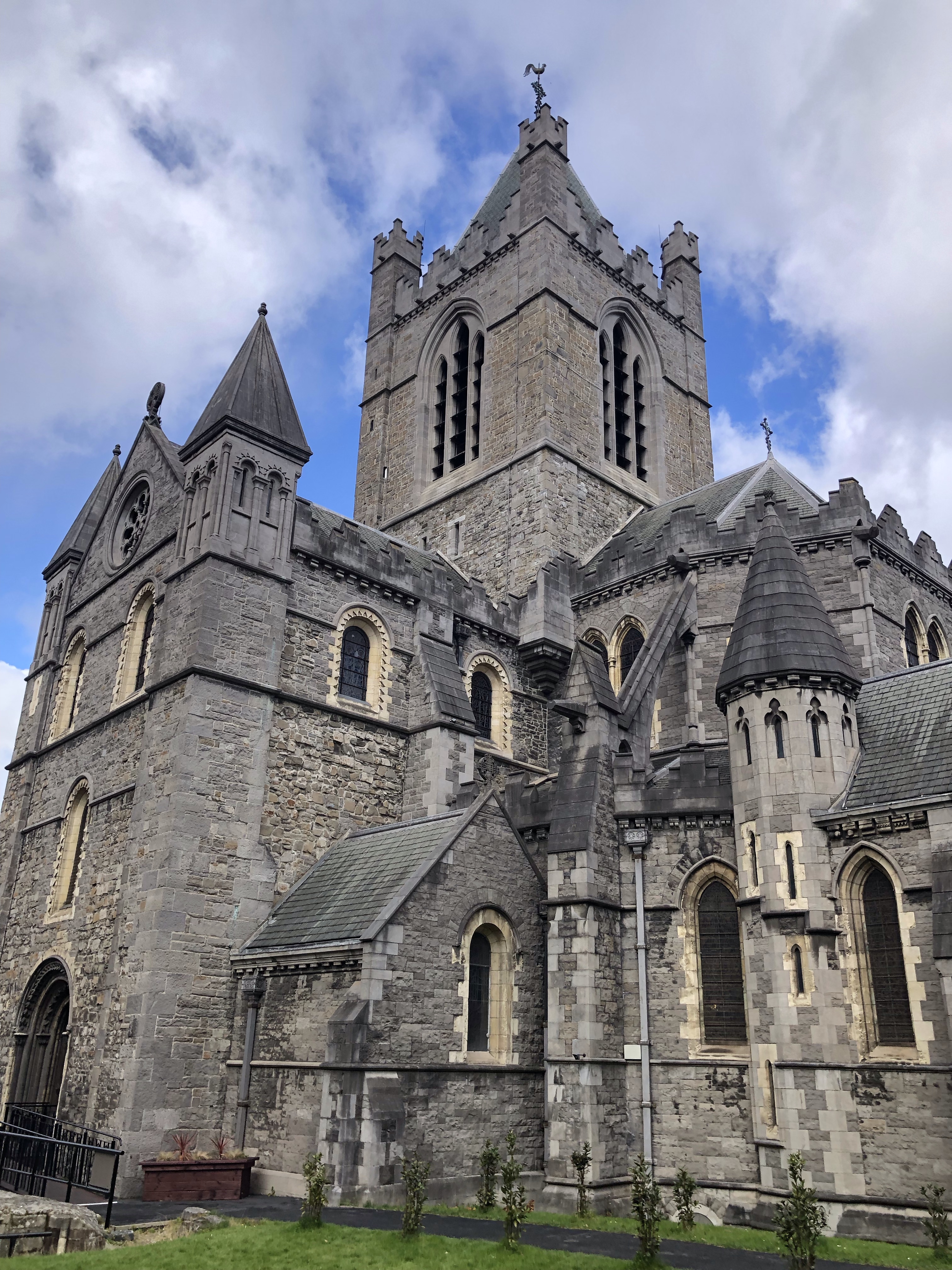
On Saturday morning, I skipped the conference sessions and went to Epic, the museum of Irish emigration. Armed with my trusty headset, I got my ‘passport’ stamped in all the galleries. At lunchtime I walked up to the cathedral to meet Katherine and have lunch. Then that afternoon it was time to catch the bus back to the airport and catch our (delayed) flight back to Manchester. Overall, it was a great conference and offered some wonderful opportunities to catch up with old and new friends.
 Home
Home 
Leave a comment