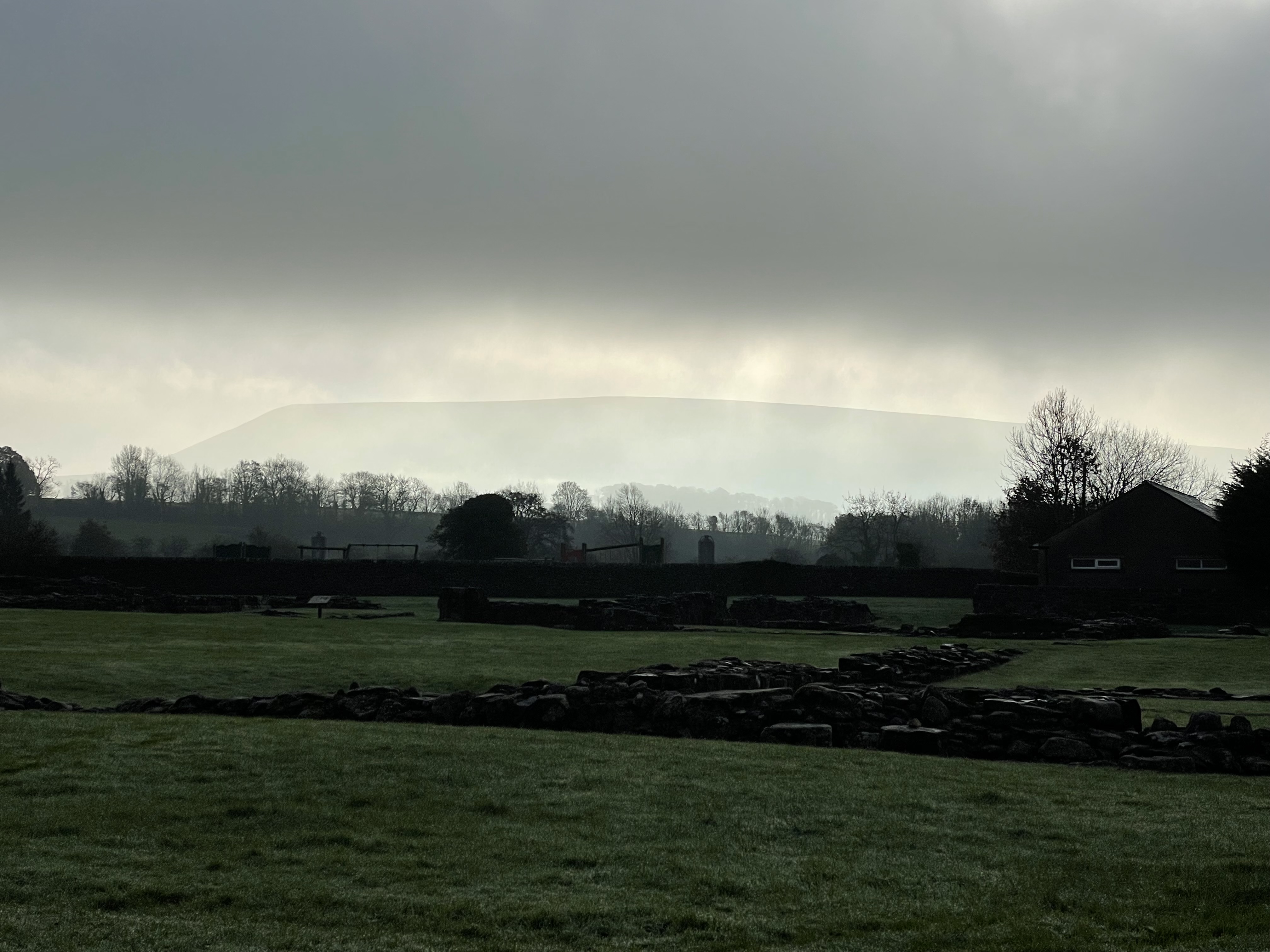
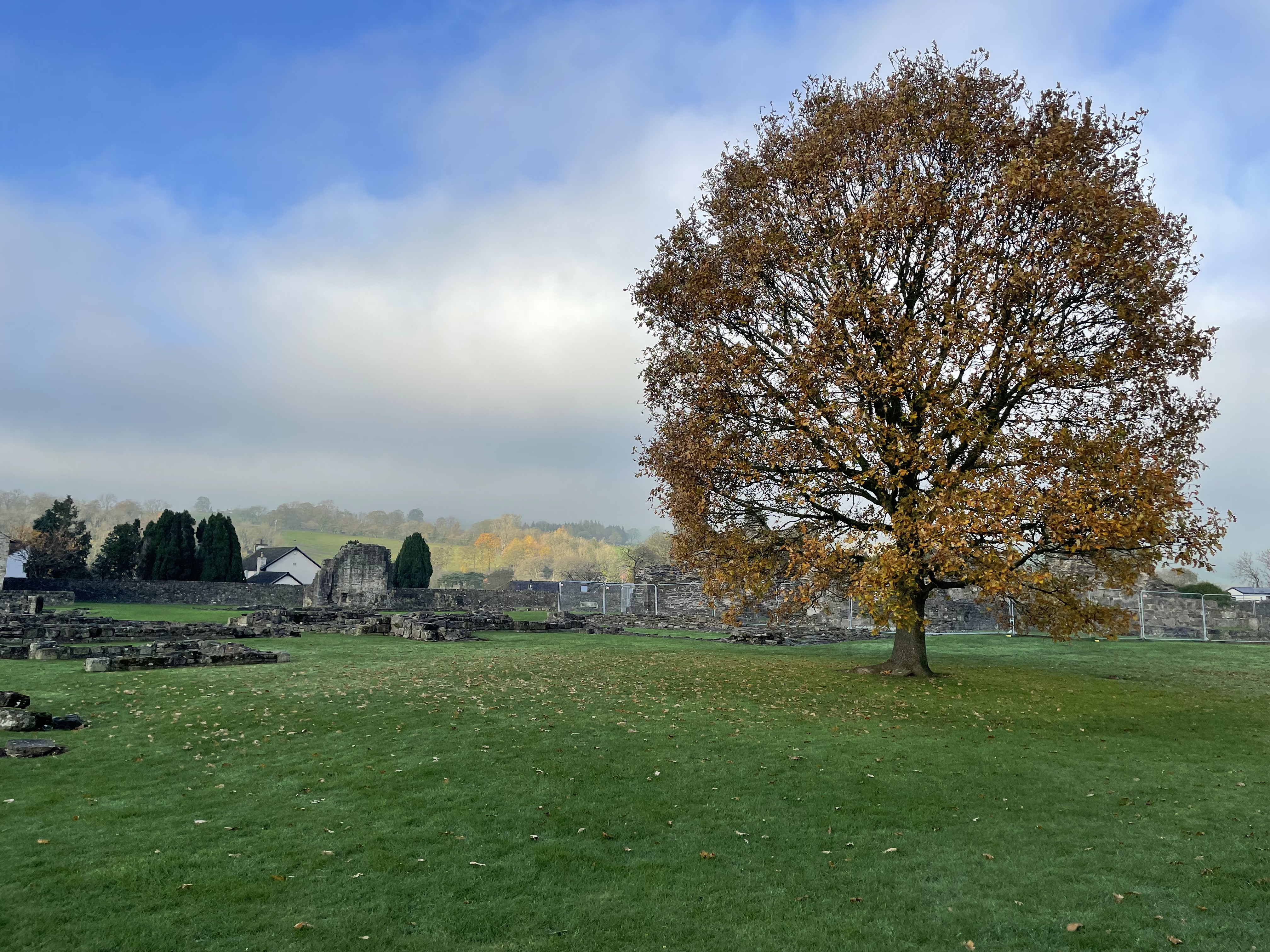
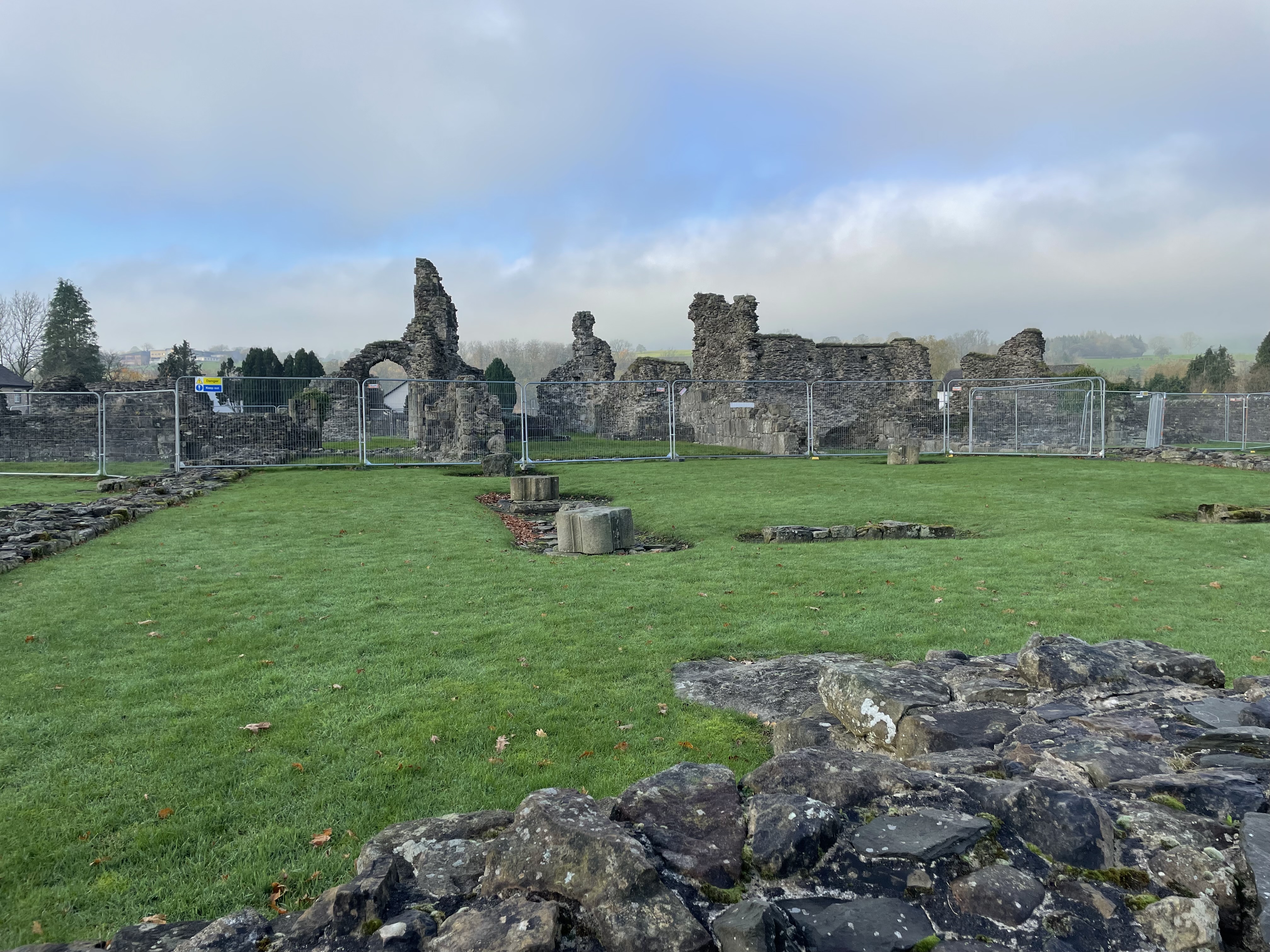
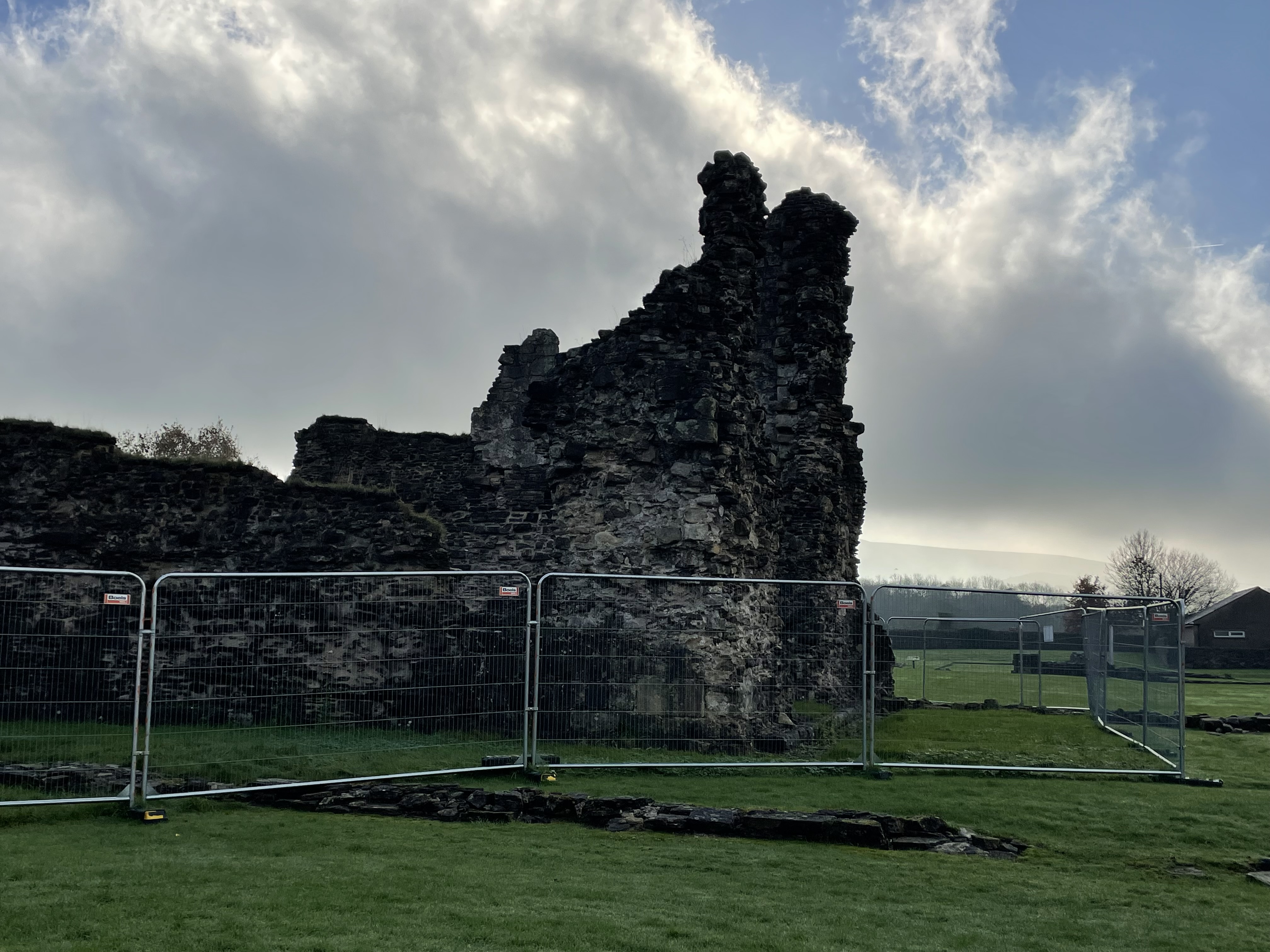
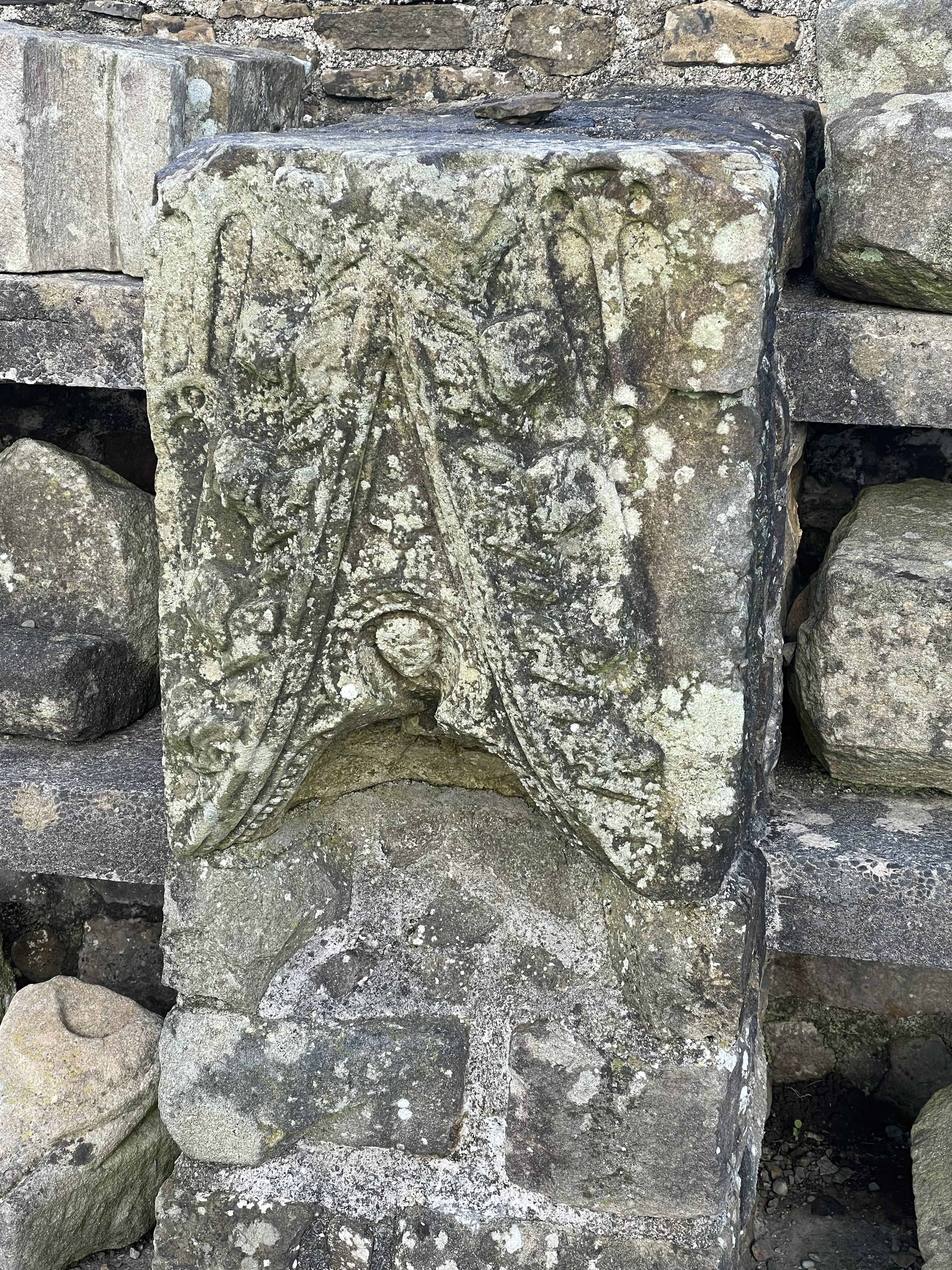
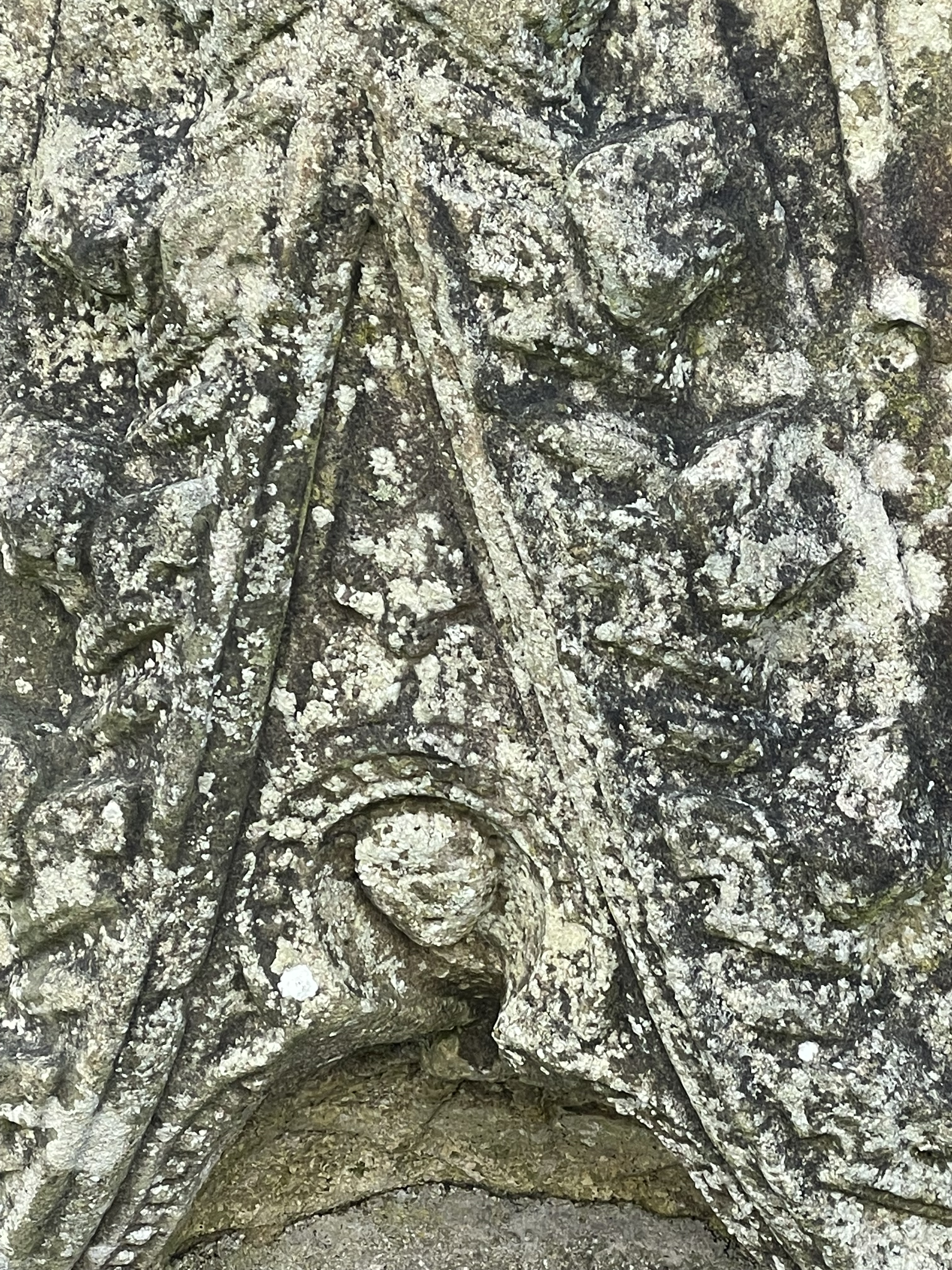
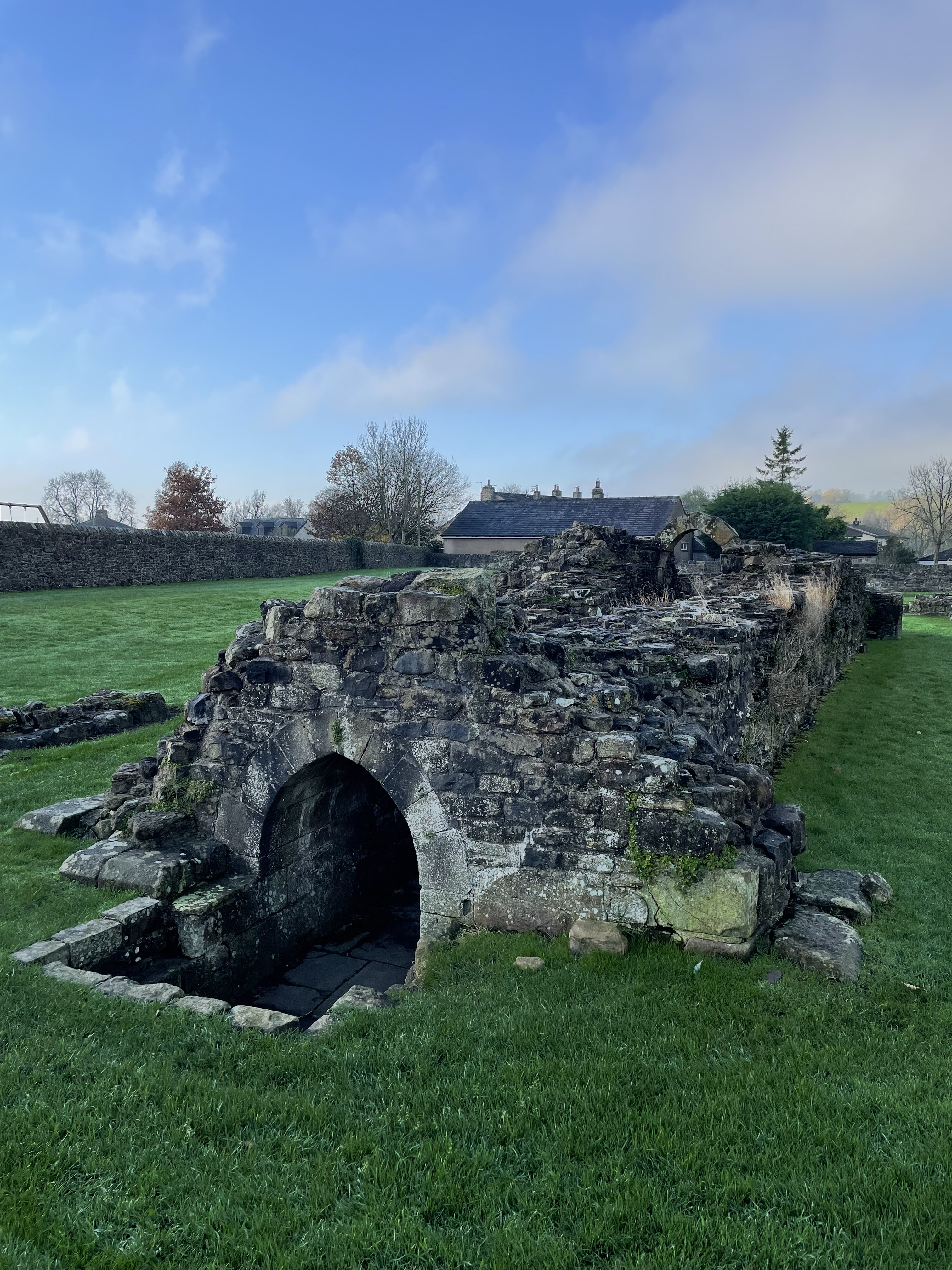
It’s been an interesting week for my Pilgrimage of Grace project, despite not having done any work on the book itself. Last week, my friend Kate and I visited Sawley Abbey in the November drizzle. Like my visit to Whalley Abbey earlier in the year, it was really quite evocative, with clouds rolling across Pendle as it loomed over the ruins.
On Thursday evening, I gave a talk to the Lancaster University Student History Society about the Pilgrimage of Grace, and one of my colleagues, the newly-minted Dr Chris Tinmouth was in the audience. He and I had an interesting chat about ballads, the Pilgrimage and Furness Abbey. This has just reinforced my intent to apply for some funding to pay for someone to transcribe some of the documents related to the Pilgrimage so that I can get on with writing my book. He and I need to go for a brew soon so that I can find out a bit more about what he knows!
Then I spent Friday and Saturday evenings reading Steve Illingworth’s book on Sawley Abbey in the Pilgrimage of Grace. Stevesits with me on the editorial board of the Historical Association‘s members’ magazine, The Historian, and his book suggests that Sawley was the potential turning point of the Pilgrimage. He argues that had the Battle of Sawley gone ahead, the king’s forces would have been surprised to find themselves outnumbered by rebel forces who had already secured the abbey and that the rebels might well have won. Instead, it was luck that meant that the battle did not in fact go ahead.
 Home
Home 
Leave a comment