
Back in February I was privileged to go to the University of California, Santa Barbara for the English Broadside Ballad Archive 25th Anniversary Conference, so here is my third post about my first ever trip to the States, of which I have some very fond memories!
Day 2 started with yet more rain, pancakes, and getting a lift to campus in a Tesla with some interesting ‘emissions’ features – as Katie said, it was an unforgettable moment!
Katie Sisneros was the first to speak on Day 2 in a panel called Race and the Foreign in English Broadside Ballads. Her paper was entitled “Islam, Piracy, and the Politics of Identity in Seventeenth-Century English Broadside Ballads (A Retrospective). She asked ‘what did the English think of the Turk?’ The answer was often inexorably tied to the political event that the ballad responded to – so it changed. But what the term Turk basically meant was “not British” and this allowed the British to define themselves – like Catholics and Jews they were poised against the English. In fact, the Turk was often paired with Jews. The Turk was, however, usually bad. During the civil war, Parliament was declared by one ballad to be worse than the Turk. Overall, Katie argued that it was the broadside ballad that transformed the Turk into a demon. She finished by noting that the power of this sort of hateful language to demonise political enemies has stood the test of time.
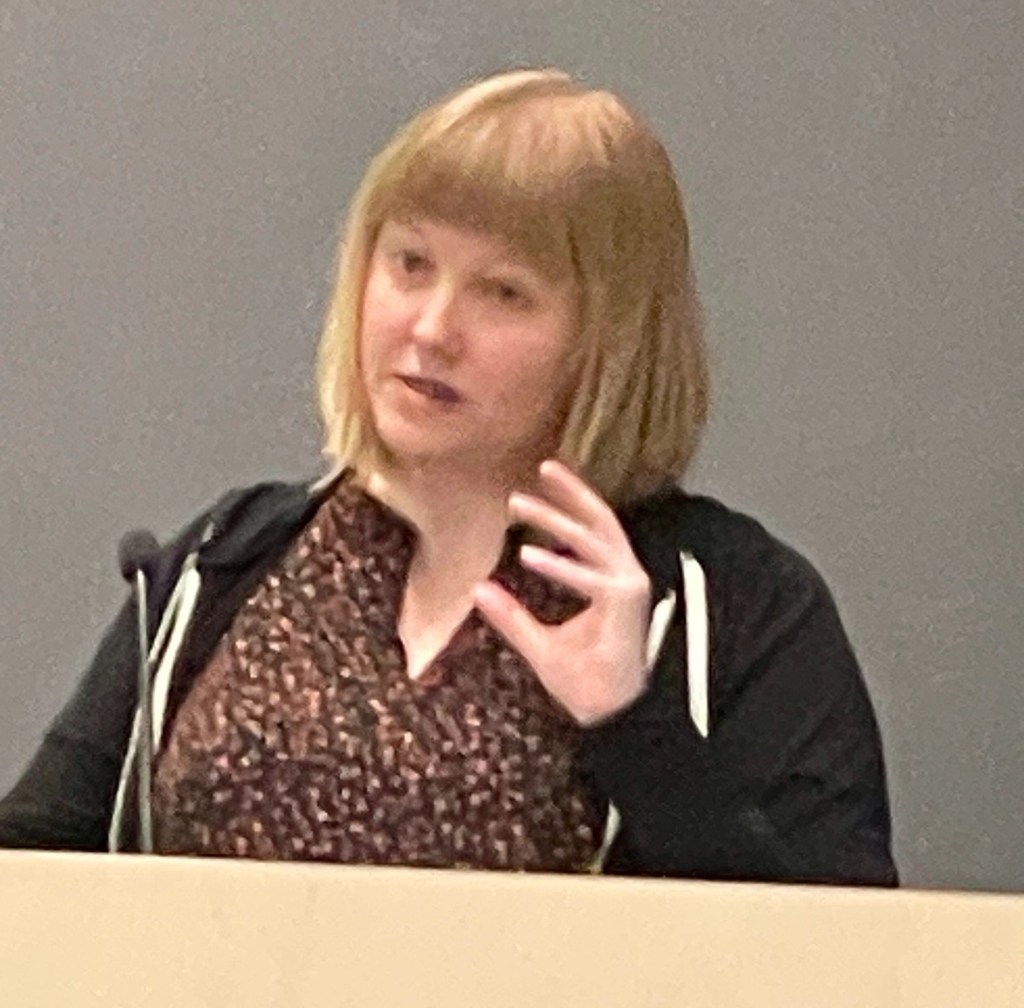
The next paper a video presentation by Gitanjali Shahani on “Coffee Ballads, Othello, and the Consumption of Difference”. She argued that broadside ballads can tell us about consumption and that coffee was a particularly interesting example because it was also shaping public spaces, and it had exotic connotations and ‘otherness’. Othello had a particularly strong afterlife which drew on his otherness too. Teas, coffees and chocolates with darkness and exotic spices themed on Othello are still available. This draws on 17th century broadsides and ballads which associated coffee with the Turk. Some of the ballads are disgusting but many just associate it with the Turk and claim that it makes people begin to resemble the Turk – it is black and has a dangerous impact on the body and makes an embodied change to humour and religion.

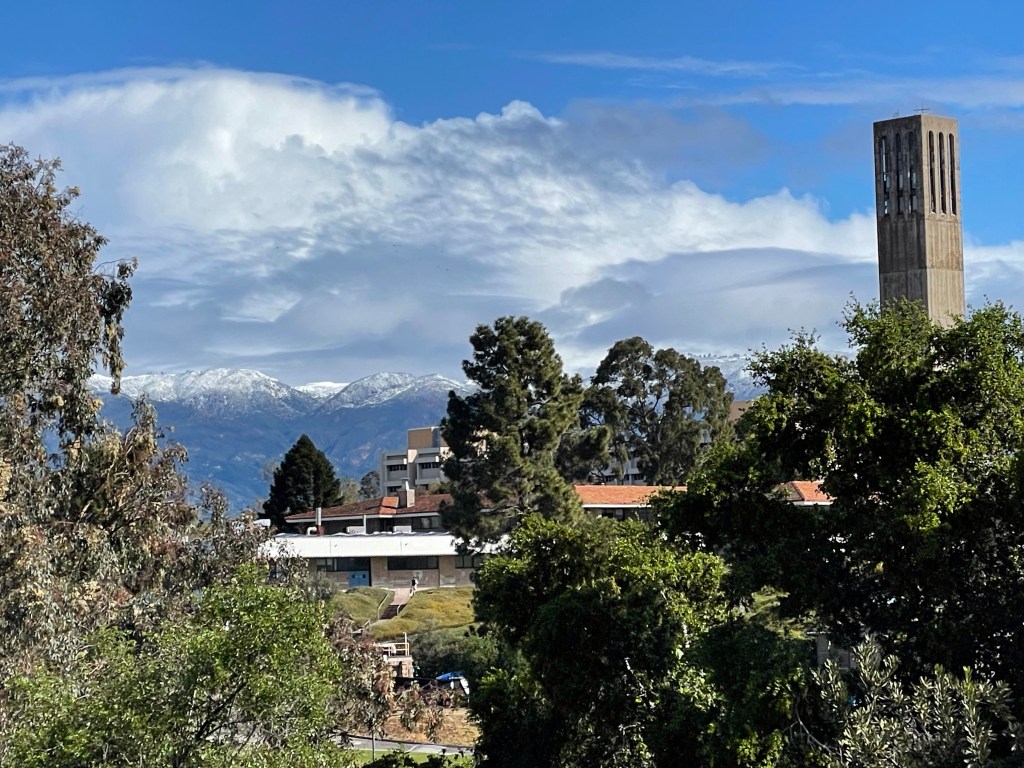


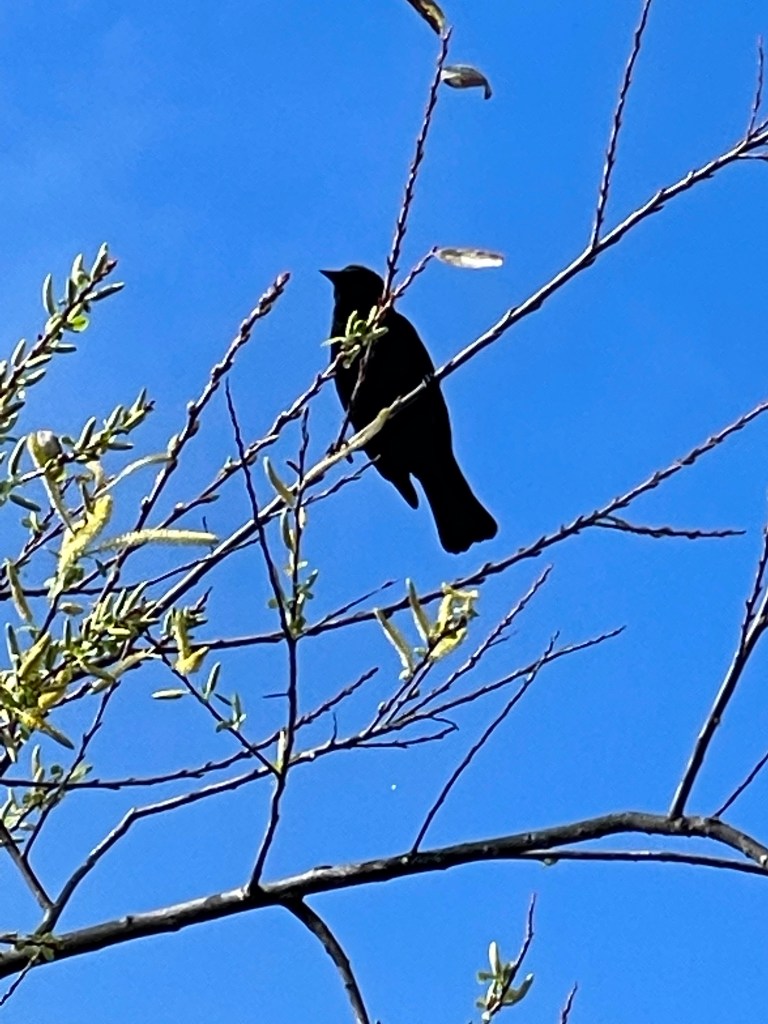
The next session was the second keynote, by Pavel Kosek, “The Materiality of Czech Broadside Ballads”. Unfortunately, by this stage the jet lag was getting to me a bit. Conversely and fortunately the sun had come out, so I decided to take the opportunity to go for a walk around the campus and take in some sunshine. In the brief spell of good weather, lots of birds came out. Including hummingbirds!




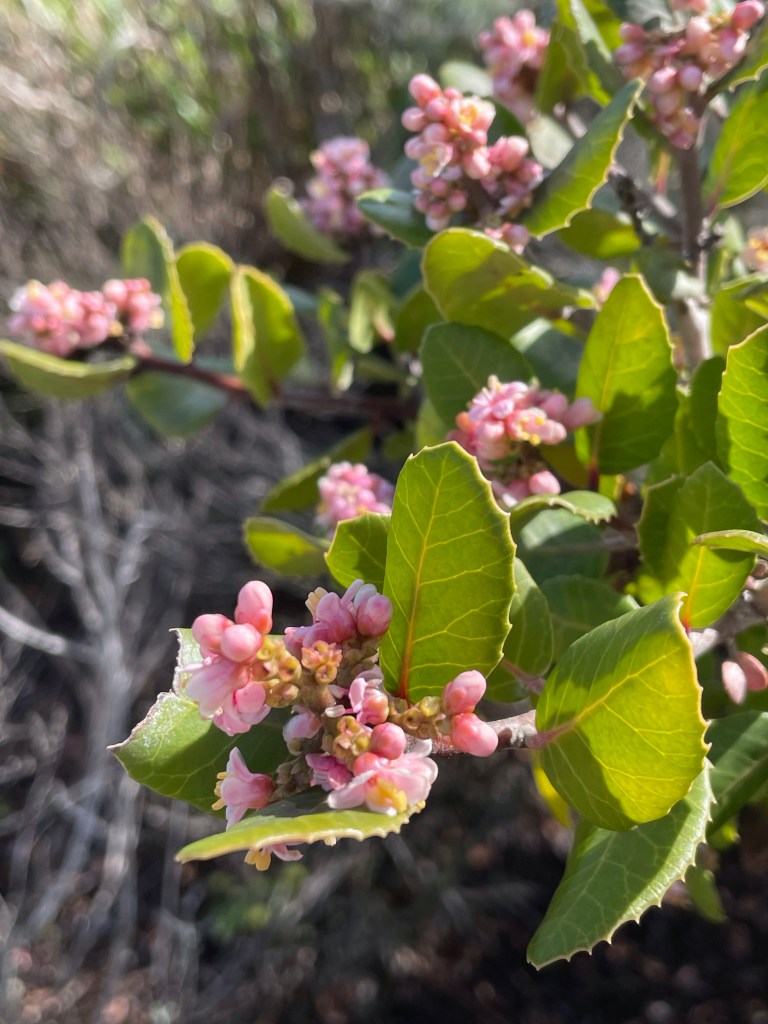


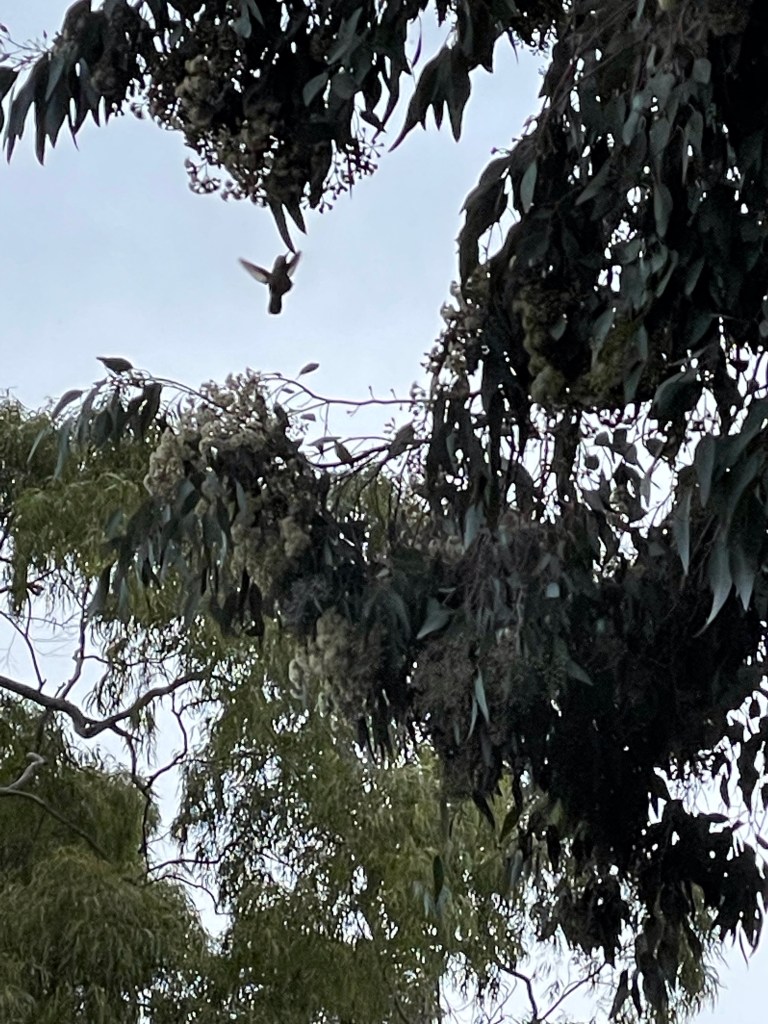
By the time of the break, it was raining again, so having had a walk (and tried to avoid all the enormous puddles), I went back in time for Session 6: Gendering Ballads. The first speaker was Kris McAbee, on “The Guinea Wins Her: Living by the Body in Ballads”. She argued that the embodiment of the song is part of the market. Sex work is embodied labour and was one of the few economic positions available to women. There was a moral ambiguity around the role because the women were skilled and honest about what they were doing unlike their clients. She described how metonymy regularly governs the way sex work is described – lots of words are used for sex workers but few if any are exclusively used for them. Instead they are also as insults to women who transgress social norms or have a broken reputation. The tune for sex ballads can often be ‘The Guinea Wins Her’- which again reinforces the monetary exchange.
Christina Luckyj then talked about “Rereading Perdita and Ballad Culture”, looking at critically underexplored intertexts in The Winter’s Tale. Perdita is usually associated with the court from which she was expelled, implicitly disparaging the adoptive family and her rustic experiences. This means they read the shepherd scene as representative of ballad culture – that is, lowness. She note that much of the ballad culture in the play exposes women to aggressive and even violent male sexual acts.
Jessica Murphy, who works on conduct literature, then spoke on “Reproductive Bodies English Broadside Ballads” and her research looking at pregnancy in ballads. Some show maids as ignorant about what is happening to the body in pregnancy. There are also lots of songs in which the women are “taught” by the men during sex. She also talked about pregnancy as a punishment for various sins and wickedness such as pride and the baby reflects the sin in its deformity, while on the other hand, sometimes a pregnant body makes a woman more human and trustworthy than non-pregnant ones. She concluded that traditional readings of the period lean heavily on the unknowingness of the pregnant body, but that’s not how the subjects of these songs understand their own bodies. They demonstrate a wide variety of viewpoints.
 Home
Home 
Leave a comment