This is the first in a series of short posts about the Sound Faith: Religion and the Acoustic World 1400-1800 conference at the University of York from 12-14 June 2024.
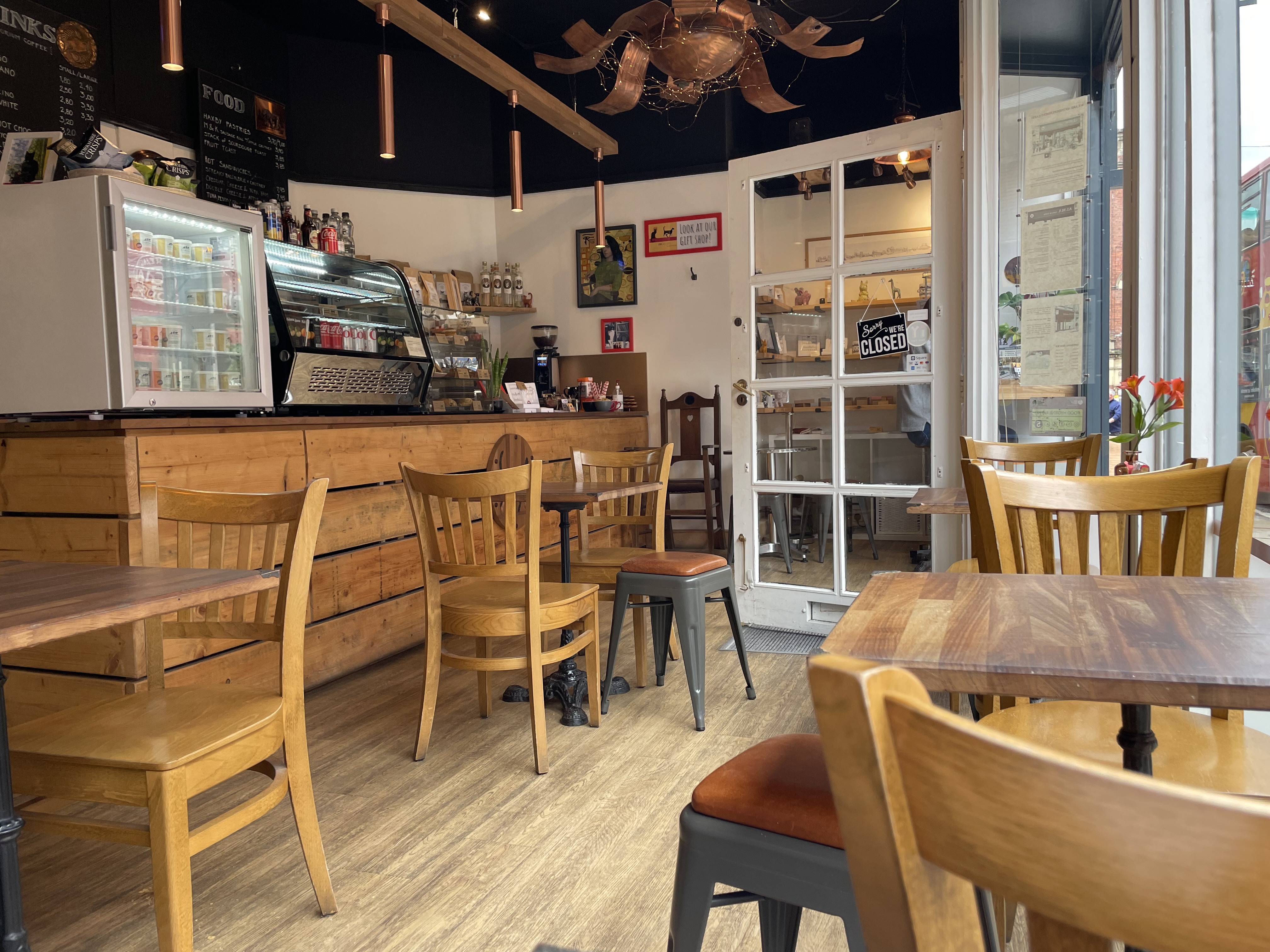
I arrived in York on Thursday at about 11 in the morning, having decided to treat the trip as a sort of writing retreat. I dropped my bags at my lovely room in the Camaraderie Guest House, and then headed back into York centre to find a café to work in for the next couple of hours. I struck lucky – the Alma café was quiet, independent and attractive and I sat at a table by the window to enjoy tea and a toastie, followed by tea and a fruit scone. I watched the rain shower and got stuck into my writing.
Because – good news!!! My article on Saint John Roberts and malfeasance in the early modern prison system has finally been accepted! Long-time readers of this blog might remember that this article has been about 15 years in the making. It started life as a palaeography exercise given to me by my fiend before I started my PhD. It has been through any number of iterations, it has been declined by at least four journals (I have slightly lost track, for obvious reasons), and has been revised substantially for each one. It is now, I think, much stronger than it has ever been and has found a much greater sense of purpose courtesy of the anonymous reviewers of Law, Crime and History, in whose next issue it will, I hope, finally appear.
The downside of this is that the revisions need doing by the end of July, and alongside all the other work I have due at the same time, that was a tall order. Nevertheless, I’m not one to avoid a challenge, and besides, it’s been waiting so long that to have a potential publication point at last was incentive enough. So sitting in the Alma café, cup of tea in hand, I finally got stuck in to the reading that I needed to do to reshape the article in the way LC&H wanted. The process, was, I think, fairly successful. I certainly enjoyed it more than I was expecting to – if I’m honest, all the revisions to the John Roberts article that have been required by journals that then rejected it have made me a little jaded and I wasn’t really looking forward to revisiting it again. But I did. So much so that I decided to skip the opportunity to go to choral evensong at York Minster and stay in the café writing until the conference itself opened. I actually feel like I made quite a bit of progress, so I think it was time well spent.
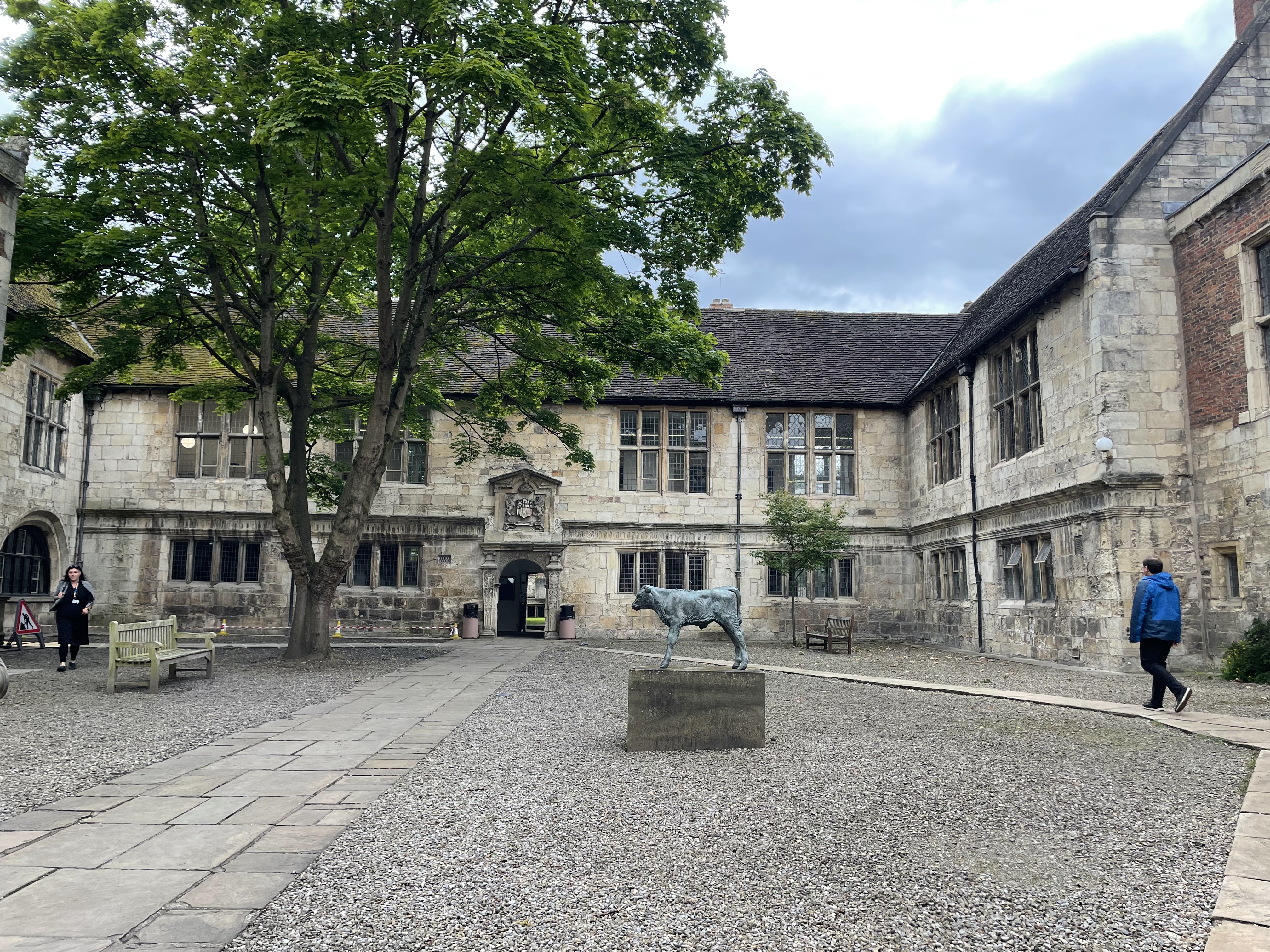
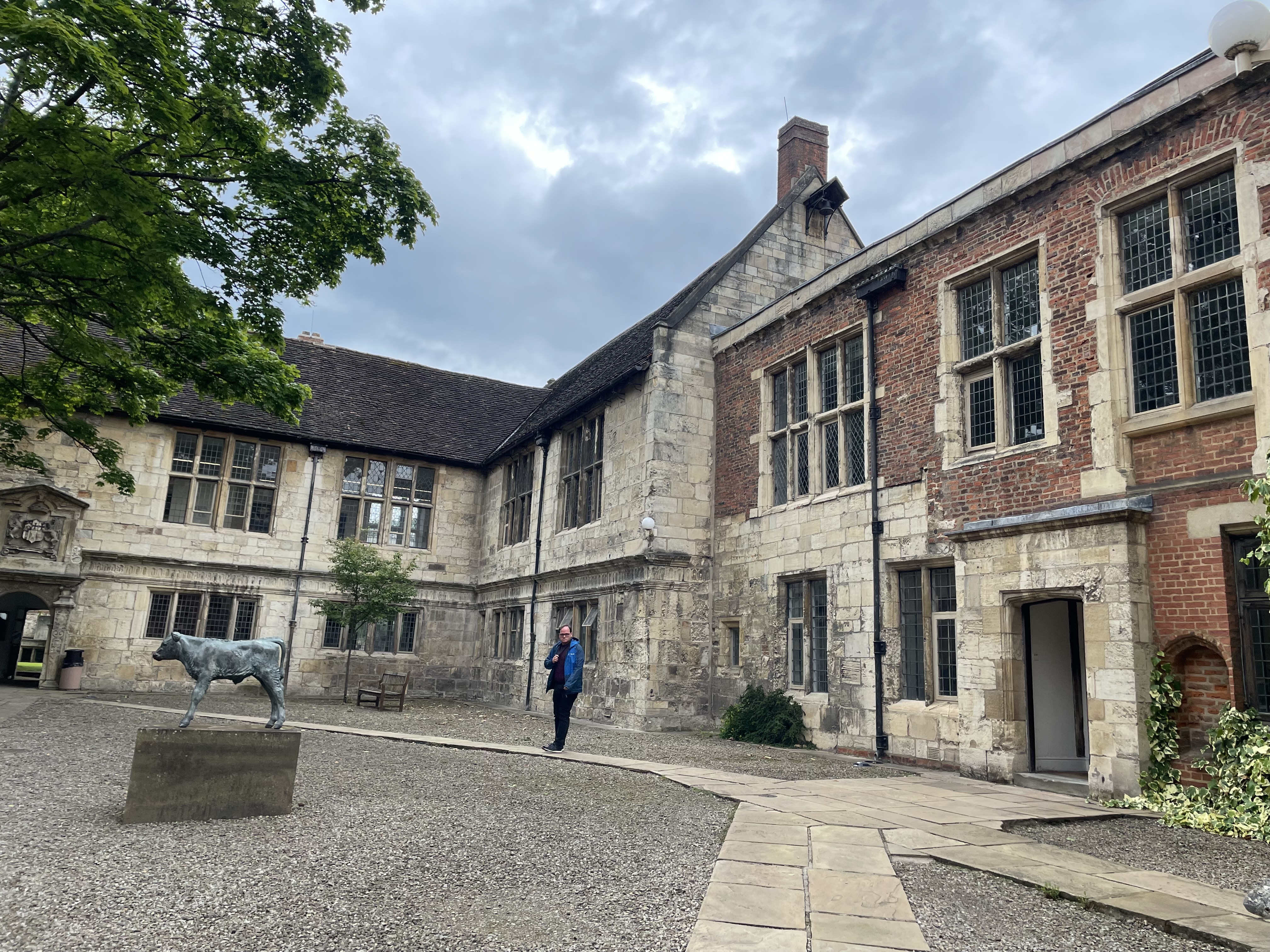
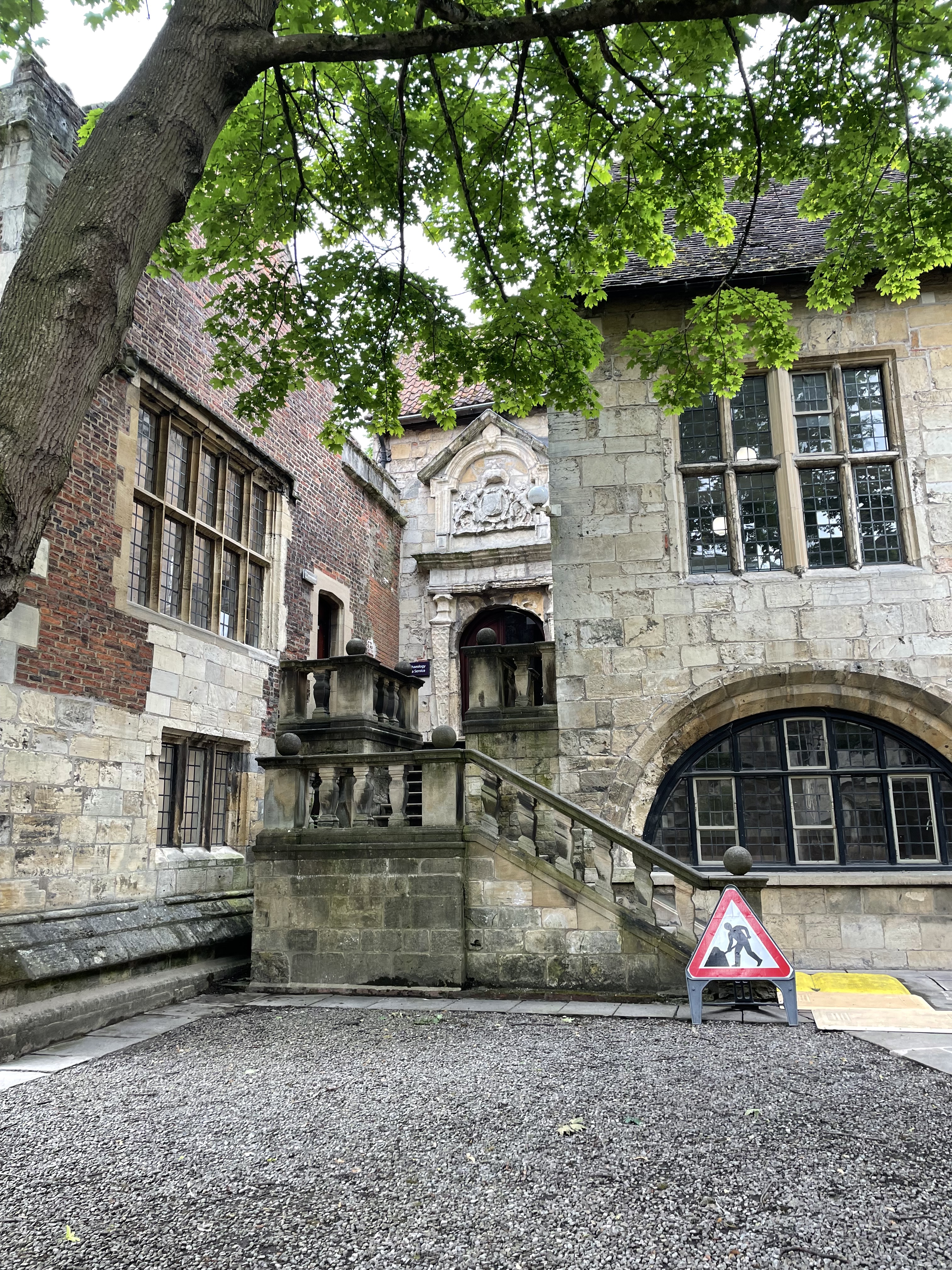
A small group of us attended the ‘soft’ launch of the conference at King’s Manor for tea, coffee and biscuits followed by a masterclass on ‘audiation’ led by Lucia Martinez Valdivia. Audiation is highly trainable if you develop it. What were the educational conditions that shape how people hear texts? The voice in your head is affected by how you were taught to read and how fast you hear. If you read fast you are less likely to hear. The soundscape shifts and adjusts but you can also adjust it by focussing on different sounds. That (which is only audition) can help develop your audiation. We compared experiences of the various activities we undertook, including audiating the phrase ‘the scrape of a spoon stirring in a mug’. Generally, we found this much easier than the prospect of imagining ‘the infinitesimal rumble of a worm tunneling through dirt’. We discussed our inability to turn off thoughts and other sounds in our head that break through the audiation as we tried to complete the activities. Orchestral musicians need to be able to shut off the other musicians that are playing. For some people the sounds implicit in the texts were much harder to imagine than others, and this is probably in part because there is so much sound in the texts we use that we don’t register is there.
There is more richness than a single account of what reading or reading aloud means in the early modern period. These people were so much more in tune with their acoustic experience than we are for understanding their world, and they too would have had different experiences of reading as we do.
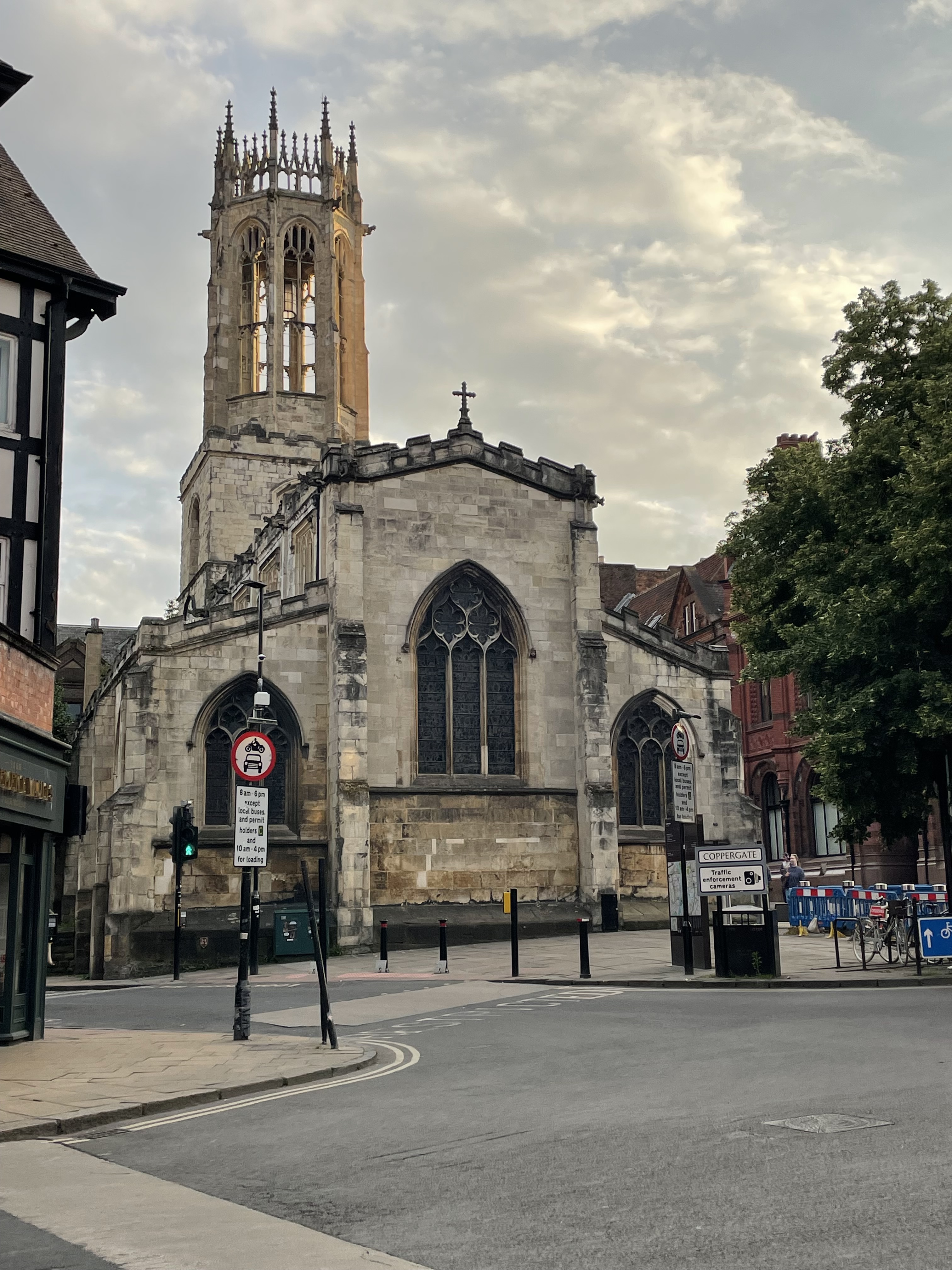
This masterclass was followed by a welcome drink and an excellent informal dinner at SPARK, where I enjoyed a really excellent souvlaki. After our meal, I went back to the guest house and wrote for another couple of hours (and yes, it was nearly midnight before I got to bed). I’m really pleased with how much progress I’ve made on the John Roberts article in the space of these few hours, so I was able to hope that by the time I finished my second ‘writing retreat’ days on Saturday I will have got the bulk of the revision done. Also, on the way back to the bus stop I passed the church where I performed with Manchester University’s Chamber Choir as an undergraduate, so that was a serendipitous surprise too.
 Home
Home 
Leave a comment