It’s been a busy spring and summer. This is the first in a short series of posts about the Social History Society Conference in Durham.
At the beginning of July it was off to Durham for the Social History Society Conference. I drove up, because the trains would have taken me twice as long and required several changes, meaning it wouldn’t be possible to work on the way. The drive was lovely, though, and the weather was excellent. I grabbed lunch with one of the Lancaster postgrads, and then sat down to decide which panels I wanted to see over the next couple of days. My first panel was ‘Difference, Minoritization and Othering in the Long Eighteenth Century’, chaired by one of the Society’s postgraduate reps and Lancaster University PhD student, Amy Stanning. The first speaker was James Fox from the University of Saint Andrews speaking on ‘Numeracy and Otherness in Anglophone Travel Writing of the Seventeenth and Eighteenth Centuries’. James suggested that travel writing helped to stimulate writing about numeracy and suggested that it was at this point that travel showed people that people had different numerical knowledge and practice. Discourses about numeracy combined with the new vogue for travel writing created a hierarchy of numeracy which legitimated anglophone, literate communication in imperial thought, over and above non-western ways of knowing based on less literate forms of numeric knowledge. Arithmetic needed to be vindicated as cultural capital and travel writing helped to do this, by creating a western European understanding of numerical practices while simultaneously ‘othering’ non-western practices. Any praise of eastern practices was in direct comparison to the western, while comparisons with the techniques of Indigenous Americans were more hostile and less favourable. Embodied practices and the lack of words for large numbers were seen as poor in comparison to western practices. He noted that some of these descriptions might not have been accurate. He finished by considering the implications of these writings for the English. The argument was that arithmetic helped to make people civilised, while the irony was that many of the embodied practices were carried out in England too. Many financial accounts were kept non-literally, even though these were disparaged in travel writing – Defoe complained about the practices in England. This style of writing marginalised people in Britain as discourses about numeracy created a hierarchy of practices in which these people had only embodied knowledge rather than the forms favoured by elites.
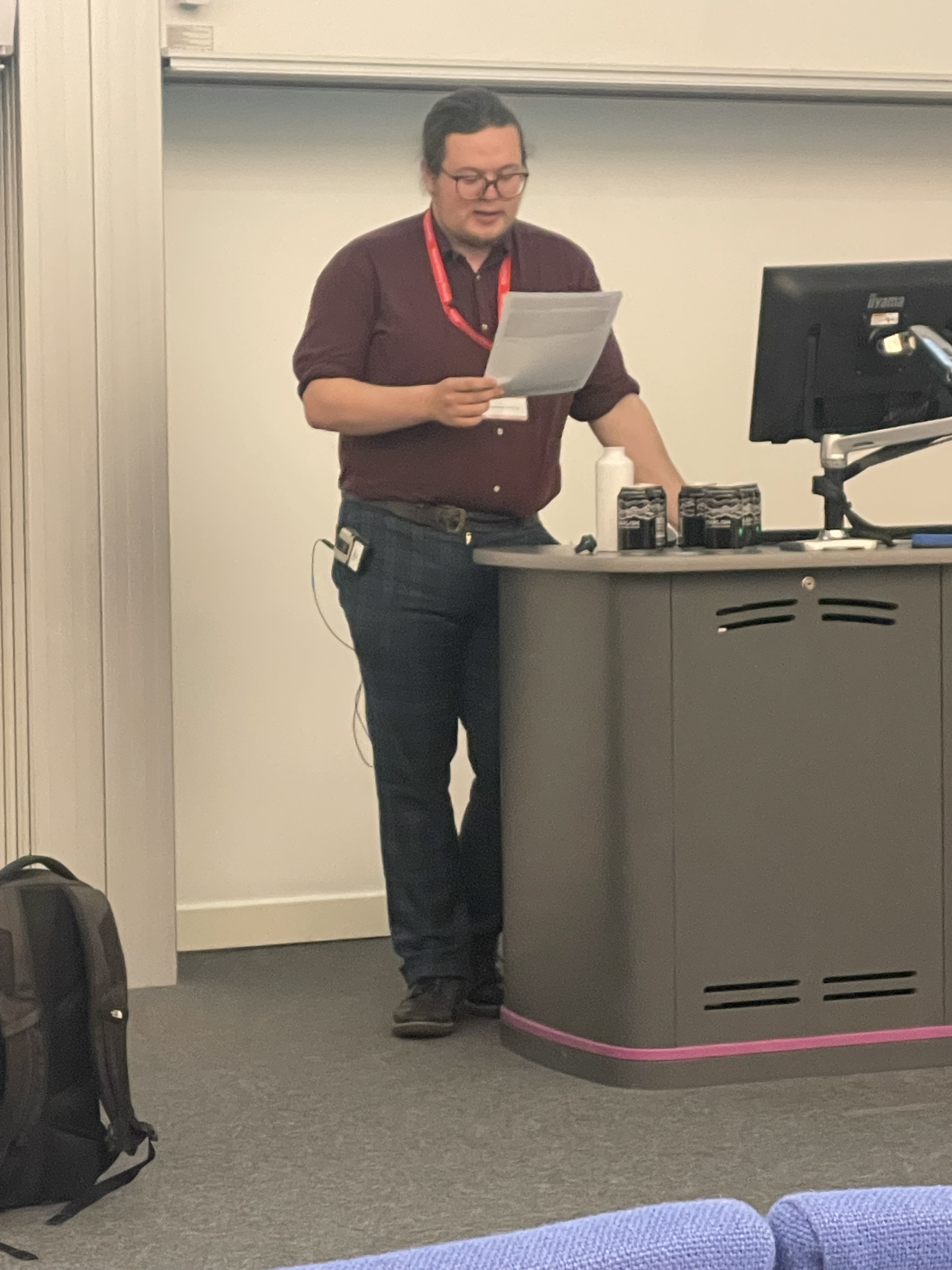
Next up was Cameron Fleming, again one of our Lancaster postgraduates and an employee of the Museum of Wigan Life, talking on ‘Thriving in the 18th Century Margins? The Standish Family, from Jacobite networks to social politics 1688-1765’. He began by discussing the problems faced by the family in the late seventeenth century, then looked at some of the received wisdom about Catholic Jacobitism. He argued that the Standish family remained Jacobite until the late eighteenth century, long after the normal scholarship suggests the belief had died out. He suggested that this was because there were few visible signs of resistance compared to the ‘15 and the ‘45. After the Lancashire Plot of the 1690s, they turned away from direct activity to things like exile and training at monasteries in France. They attempted to integrate into Protestant society through marriage and business. Nevertheless, their Protestant tenants didn’t always appreciate working for Catholics and didn’t always trust them. As time went on, they engaged in even more clandestine activities within the home. Eventually they left from France. He concluded that bonds which developed due to Jacobite activity allowed them to integrate more fully into society, despite the virulent anti-Catholic measures of the period. We discussed briefly after the paper whether the verses he mentioned from a letter, and had described as poetry, might be a song, given the fact that it includes the line ‘the theme of my song’.
Finally, we heard about ‘Romani Life and Work in the Long Eighteenth Century’ from James Peate. James started by outlining the problems facing the scholar researching Romani history, in both terminology and the lack of literacy among the Romani population. He noted that Romanis don’t even feature in the recent RHS report on Race, Ethnicity and Equality. He pointed out that the Vardo caravan only became part of the culture in the mid-19th century, and prior to that there were complex lifestyles and no apparent cultural norms – they included staying in boarding houses or having no abode at all, with people sleeping under hedgerows. In winters, when they most often stayed in urban areas, they became more integrated into settled society. They often seemed to camp in tents, either in temporary or semi-permanent camps. The most prominent of the semi-permanent camps was Norwood, which became something of a tourist attraction to which people went to have their fortunes told. They also mended the inexpensive metalware used by ordinary people – many were tinkers and the word ‘smith’ appears in many accounts. Many were also musical performers, eventually giving rise to the fairground tradition of the present day. It perhaps grew from them attending fairs and markets as entertainers. Others were travelling traders who took goods from urban centres to rural areas which had fewer goods and services, so James suggested that they played a significant role in rural economies. This changed due to enclosure and industrialisation, because their ability to roam was restricted and their communities were displaced, becoming physically dispersed and undermining the links they had built in local communities. Overall, he argued that long-eighteenth century represented a thawing of relations between the traveller and the settled, where they were better tolerated than before or after.
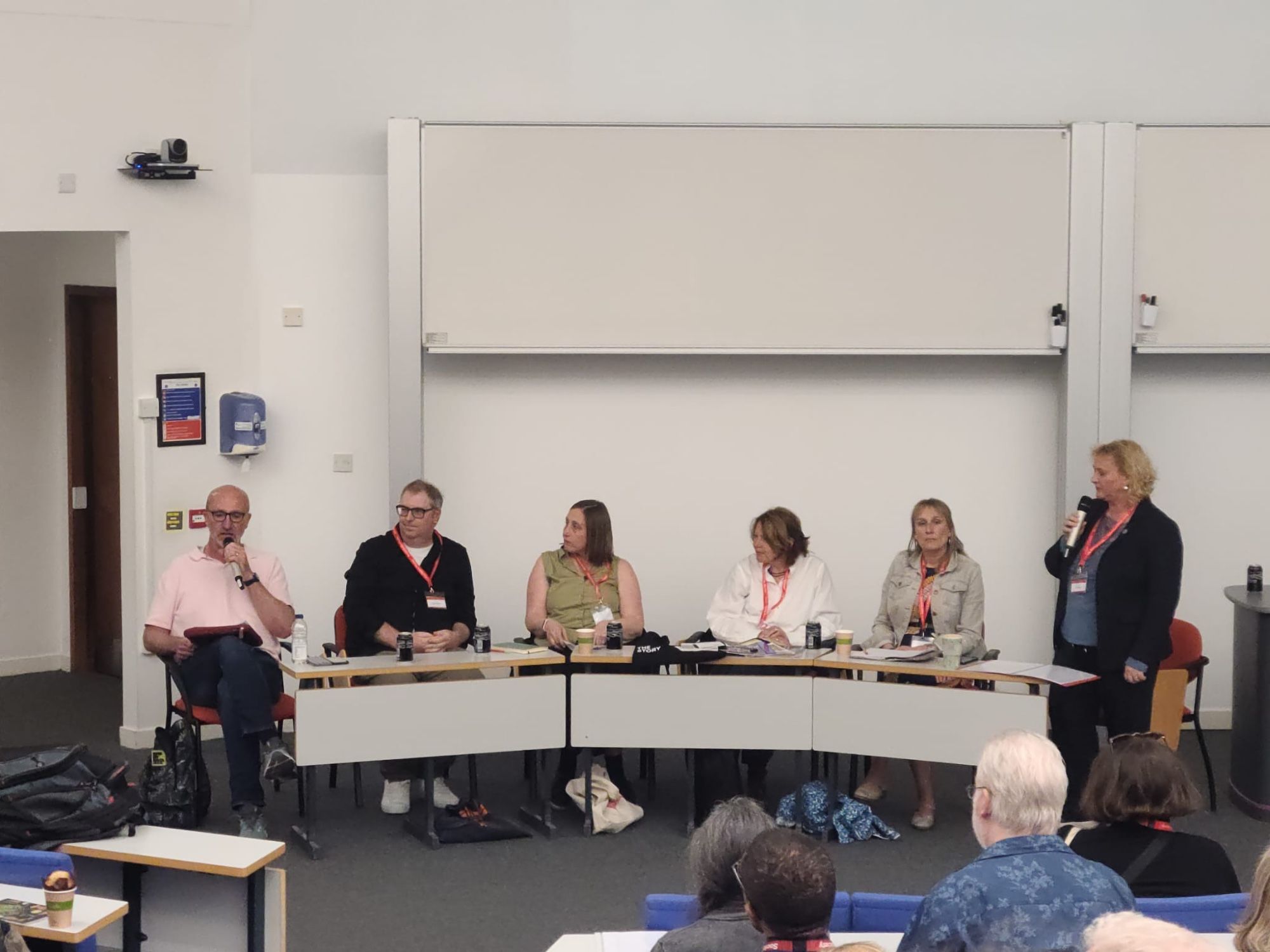
After the (non-existent tea)[1] break I chaired the Conference Roundtable with contributions from our panellists David Minto (Durham University), Rob Johnson (Investing in Children), Lucy Ridley, Eileen Perrie (Redhills), and Anne Allen (Durham Castle and Cathedral). The panellists discussed a series of questions around the role of public history in their work and in society. This gave us some fascinating food for thought before the Routledge Drink Reception and Prize Giving, and dinner back at Collingwood College. Later that evening, we repaired to The Stag’s Head for the SHS quiz, which was great fun even though we were roundly beaten!
[1] Muffins appeared at this tea and coffee break, but not a lot in the way of tea and coffee… By the time I got there, the urns had run dry – and I was by no means late.
 Home
Home 
Leave a comment