This is the second in a series of three posts about the SHS conference in Durham.
Day 2 broke dull and damp, but breakfast was excellent, and afterwards I wandered down in the rain to the venue for the first panel. I had planned to go to one of the panels with two early modern papers, but as I only arrived in the Calman Centre at 9 and then realised the panel was in a different building, I decided to stay put and talk to Manchester University Press about my Pilgrimage of Grace book, and then do some work on my funding application. Time well spent, I think, as I did manage to rewrite our Summary section with clearer objectives.
After the break, it was time for our panel ‘Taking the Law into their Own Hands? Community Resistance in Early Modern Britain, 1530-1807’, chaired by Elena Ghiggino. I went first talking about Thomas Cromwell, ballads and the Pilgrimage of Grace. The second paper was given by my PhD student, Amy Louise Smith: ‘Libel, Law, and Order: Defamation in Provincial English Communities, c. 1603-1640’. Amy argued that while libel is seen as disorderly, it most usually was employed to correct social disorder such as cuckoldry, corrupt governance, enclosure etc. She noted that the law changed in 1606 so that all libel cases against private persons were heard in Star Chamber, and that there was a rise in defamation cases. The rise in credit-based culture also created increased litigation. Nevertheless, the law was only one tool among many in redressing grievances. She also suggested that it was justice rather than law that people wanted. Libelling was a folkloric custom associated with justice, and that the involvement of authority figures gave the libels weight even though they were non-legal.
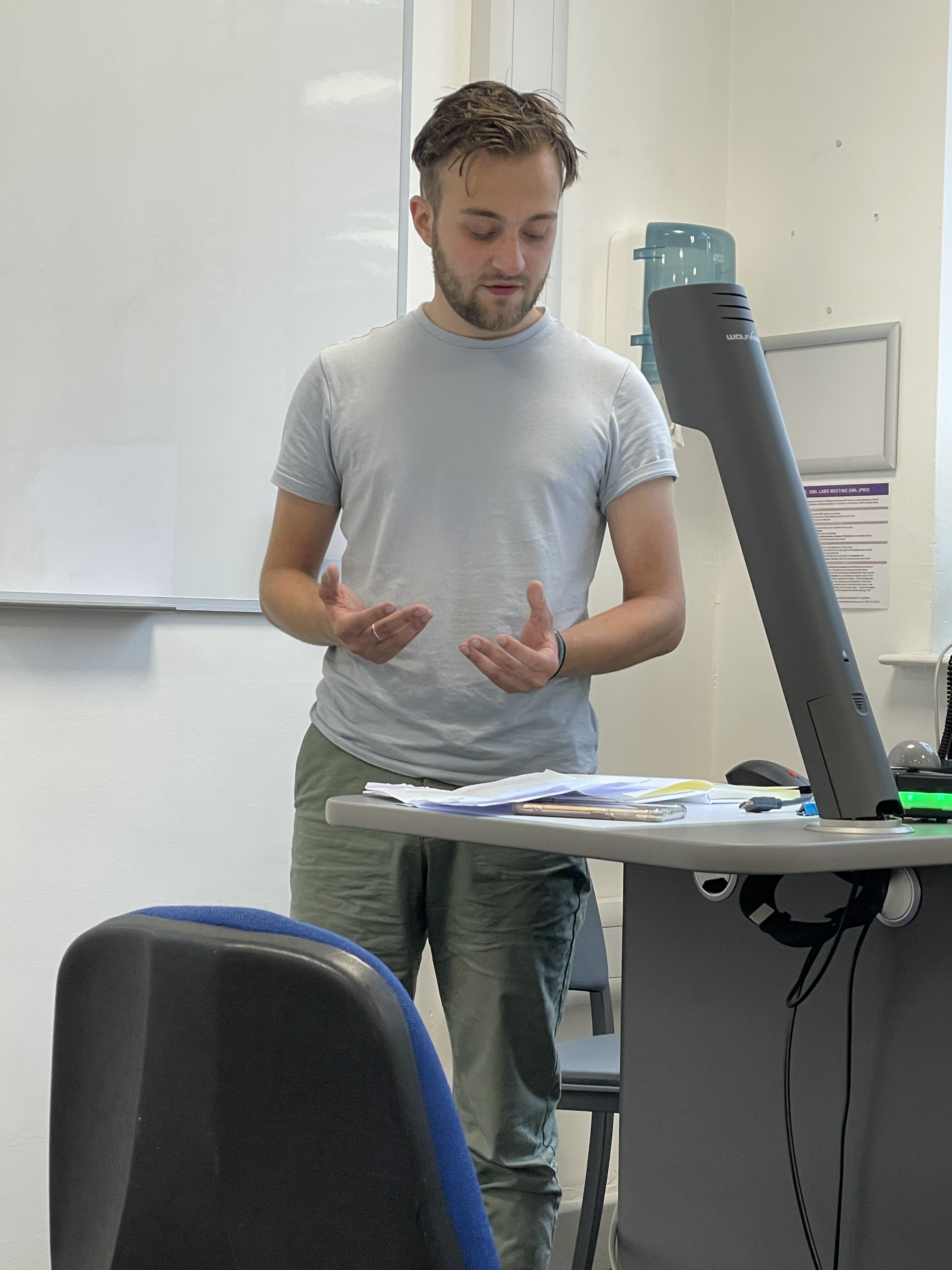
Finally, it was time for Dabeoc Stanley on ‘Smuggling, Deforcement, the Mentalité of Criminality in Eighteenth-Century Britain’. Dabeoc contined the themes of Amy’s paper, with his discussion of the ways in which smugglers demonstrated their own understanding of what was justifiable, given that the merchandise they brought into communities were often superior and cheaper than those that came through official channels. He concentrated on one particular aspect of the violence of smuggling: deforcement – that is, the liberation of seized smuggled goods from the authorities. Unlike smuggling which was usually meticulously planned, deforcement was often a spontaneous and violent expression of local grievances. Dabeoc noted the significant role of women in many of the episodes. In reality, the letter of the law was mitigated by local experience, and the state often failed to prosecute individuals for deforcement successfully. In many cases there were attempts to reach an accommodation through bribing the customs officer with keeping some of the contraband for the revenue, albeit under threat of violence.
I thoroughly enjoyed the panel, which hung together really well, as there were some really strong themes around the ways people justify breaking the law in the name of justice and order which ran through all three.
We then went for lunch, and afterwards I did a little more work on our grant application rather than going to the next parallel session. I rejoined the main event at Henry Miller’s drinks reception and book launch, from which I had to be dragged away for the AGM, where I had to give a brief report as secretary. This was also where our Chair, Naomi Tadmor, announced that I would be stepping down as secretary in order to take over from Louis Pulford as the administrator when he leaves in August – more on that later…
Our keynote was given by Professor Andy Wood, ‘The dull compulsion of economic relations: social relations and the labour process in England, 1500-1640’. Clearly this was of great interest to me, as Andy’s work has really informed my research and teaching for a long time. He pointed out that work formed a boundary in early modern England, with the labourer being looked down on by gentry and elite. Thomas Smith elucidated the ways in which the nobility and gentry looked down on the labouring classes. You could deprive people of status by showing that they were labourers. The title of yeoman – the goodmen – was one way of confirming non-gentle status, as was working with one’s hands.
But social mobility jarred with views of the social order. Early modern elites tried to control the wages, mobility and labour of the non-gentle class. Labour discipline was really important in the period. The majority of the population made its living from the land, but the poor were characterised as being workshy, lazy and thieving. They were not seen as useful or serviceable.
He argued that squeezing the poor was a conscious objective in order to maintain discipline and especially to keep the young in order, nevertheless, the knock-on effect was increased agricultural production and efficiency. It reminded me of present-day academia, as he commented that the labourers were expected to work longer and harder for less remuneration. Sometimes labour discipline could be punished violently, for example being placed in the stocks for shirking work. Urban authorities were particularly concerned to enforce labour discipline. Laziness also became associated with criminality.
Nevertheless, these are pictures from elite sources, so looking at depositions in the cases against the poor might give some insights into how the labouring poor saw themselves. He argued that workers had discourses as their command to counter these pictures of the poor, for example through communal action. There were also surveys in Norwich which show that the poor felt they worked harder. They record which households received poor relief, and which received no alms. The poor parishioners worked hard, often in the textile trade. They were stable and had lived in the parish for a long time. These urban poor were working in industry, and mainly making enough money not to qualify for poor relief even though they were in poverty. These surveys also demonstrate the role of women in work and in poor relief, although their position worsened during the sixteenth century due to changes in the labour market brought about by increased birth rate.
He discussed how cobblers, cordwainers and some other trades had particular reputations for being trouble making – the leader of the 1536 rebellion was known as captain cobbler, and the phrase ‘the clouted shoon shall rise’ was a threat of rebellion. He also gave an example of what he saw as an early Henrician trade union of cobblers.
 Home
Home 
Leave a comment