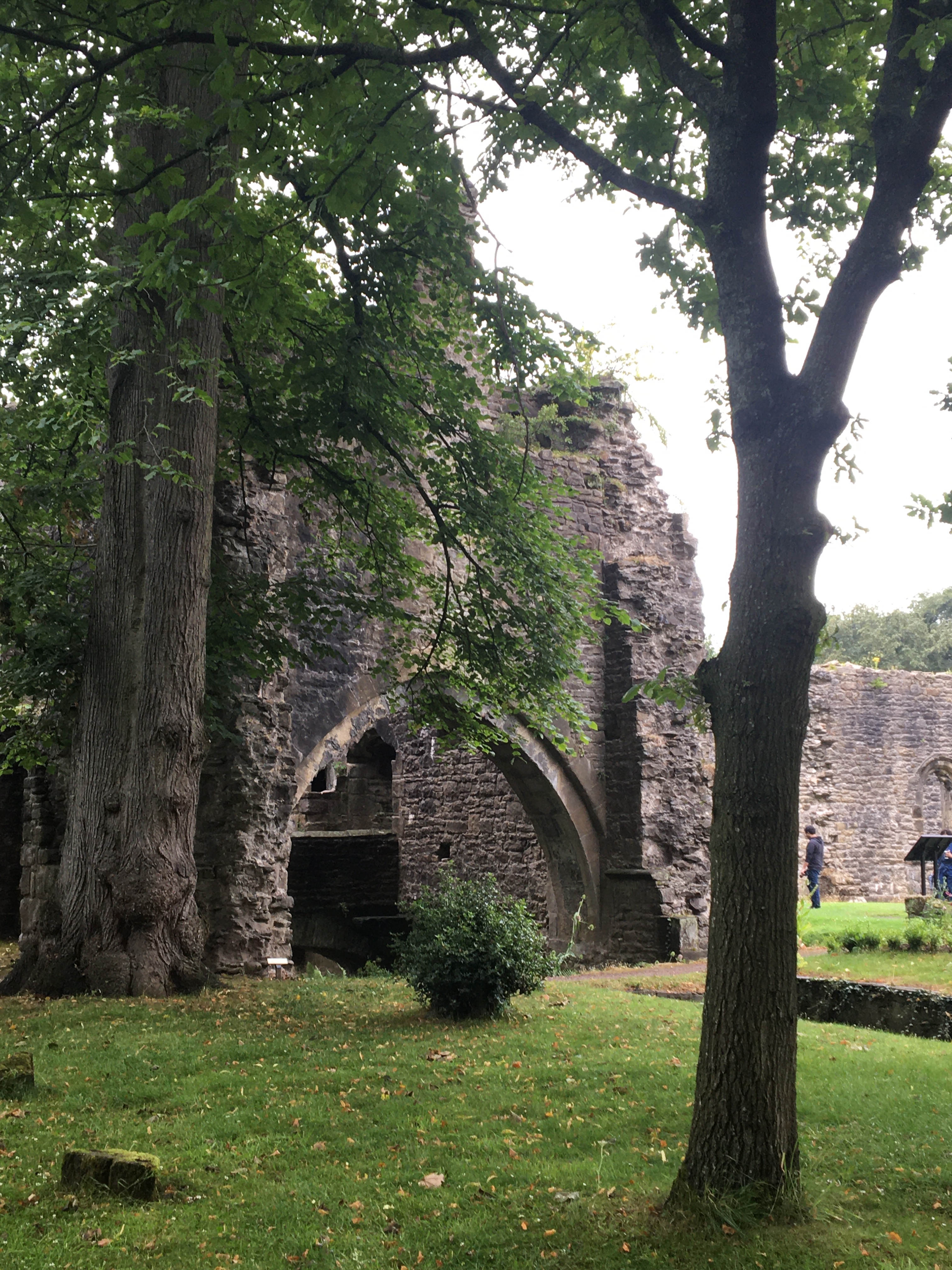
By the time you read this, it will be a few weeks ago, but today I made my first ever trip to Whalley Abbey. I’ve been intending to go for several years, ever since I started working on the Pilgrimage of Grace, but I have never made it. To be honest, it wasn’t that I finally got myself sorted out and organised a trip, but rather that the community choir with whom I sing, The Valley Singers, were performing a concert there. Instead of arriving at 1pm for the rehearsal, I went early and had lunch in the Abbey cafe and then went for a wander round the ruins.
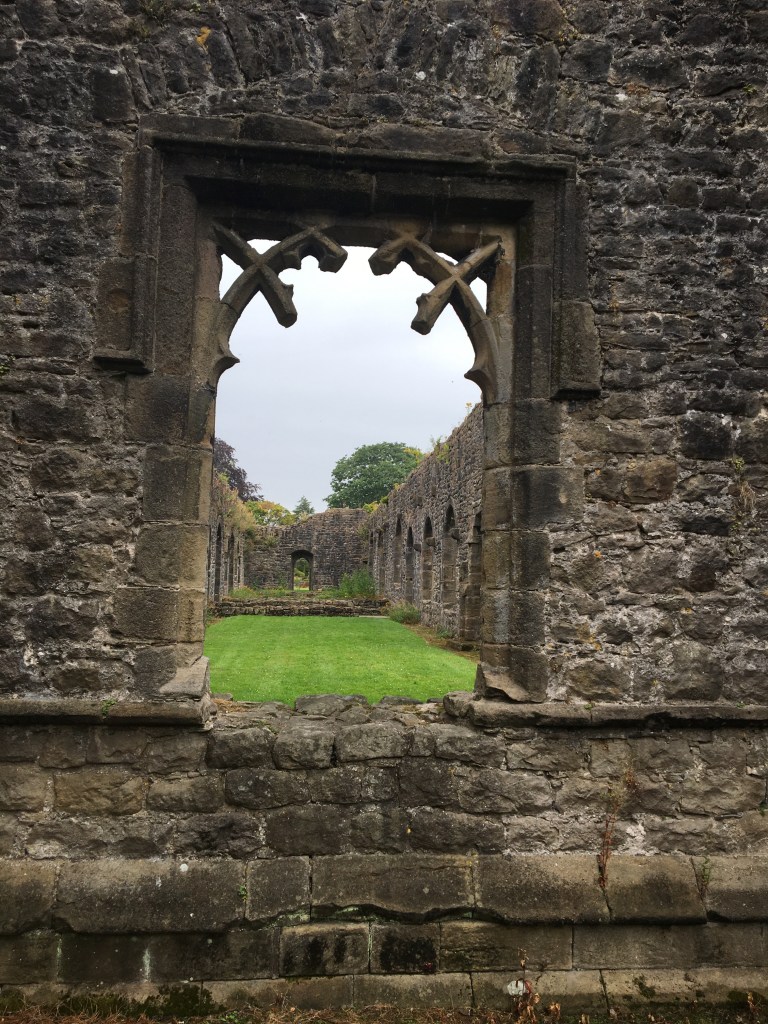
The weather was warm, damp and overcast. I found it to be a particularly evocative place – quiet and peaceful, and like all ruins, perhaps a little melancholy. It was here that in October 1536 the insurgents in the Pilgrimage of Grace persuaded the Cistercian monks to swear to the rebels’ cause, by force, if the account of the Abbot, John Paslew, is to be believed. Paslew eventually pled guilty to treason and was hanged on Lancaster Moor. Tradition has it that he is buried in the graveyard of the parish church of St Mary next door: some of the misericordia from the Abbey finished up there, but it seems unlikely that Paslew did.
The dissolution of the monasteries didn’t happen overnight. It started with the closure of the smaller institutions. Whalley should have survived this process, despite the undoubtedly luxurious lifestyle of the abbot and his guests. Paslew was clearly worried though, as he had paid money to Thomas Cromwell in an attempt to shore up his position. Unfortunately, and perhaps ironically in the short term, the Pilgrimage of Grace dashed any hopes that the Abbey would survive the Reformation unscathed. Reading Henry VIII’s letters to his representatives in the north, it is clear that he wanted swift and forceful action to put down the rebellion. Whalley would be no exception.
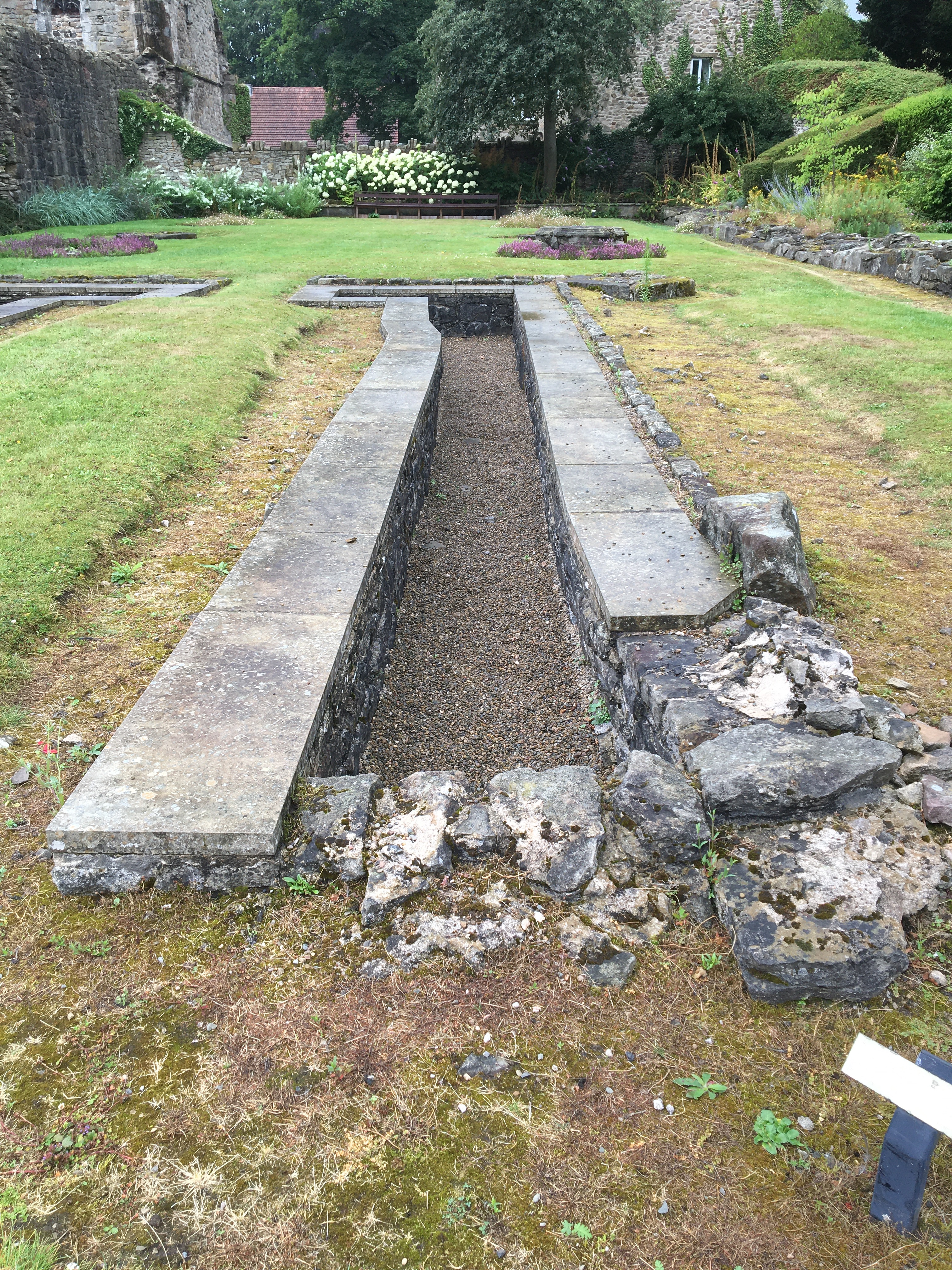
So first thing on Saturday morning, I was trawling through State Papers Online looking for references to sound in the. Pilgrimage of Grace, and by lunchtime I was there in one of the key spots. The ruins are interesting not least for their choir pits. Not, as you might imagine, places to throw recalcitrant tenors, but channels dug under the choir stalls to allow the singing to resonate even more.
I still have to go to Sawley, by the way. It’s also not far away, but I haven’t had a concert organised there to galvanise my trip! I’d very much like to go back to Whalley soon, and have a look around the church and the rest of the village, which is very pretty.
But what of the concert? It went quite well. We sang a wide range of pieces, from the Bruckner Locus Iste and Verdi’s March of the Hebrew Slaves, through the Benedictus from Karl Jenkins’ Armed Man and Bob Chilcott’s gorgeous The Lily and the Rose, to the Beatles When I’m Sixty-Four and Hushabye Mountain from Chitty Chitty Bang Bang.
When I was asked several weeks ago if I would sing a solo item, I thought I had the perfect piece for a midsummer evening in the form of Barber’s Sure on this Shining Night. I learned it when the children were small, and now they are bigger than me, but I’ve never had an opportunity to sing it in public. There are, after all, only so many occasions when you can deliver the line ‘High summer holds the earth’ and have it sound appropriate. But of course, the concert turned out to be at 2.30pm, so it perhaps wasn’t as close to the perfect choice as I’d hoped! Still, it went very well, I was pleased with it and the audience seemed to enjoy it.
 Home
Home 
Leave a reply to Sawley Abbey and the Pilgrimage of Grace | Jenni Hyde Cancel reply